Nepal - EBC (Everest Base Camp) Trek - Preparation
07 Apr, 2026 | ~1200 words | Also available in: 中文
This post covers the preparation for my 2026 EBC trek in Nepal.
Things You Can Prepare in Advance
- ✅ Flights to Kathmandu
- ✅ Kathmandu <-> Lukla flights
- It’s basically three airlines: Tara, Sita, and Summit, all departing around 6–8 a.m. You can check schedules at https://www.kathmanduluklaflight.com/ — one-way tickets are all around $235. I only booked a one-way ticket and plan to book the return flight on the way down.
- I picked Tara because Tara Air flies the Canadian-made DHC-6 Twin Otter 😂
- ✅ Pre-arrival e-visa
- You can submit an online application ahead of time at https://nepaliport.immigration.gov.np/ — just click the first option, “Visa On-arrival.” From what I understand, this isn’t the visa itself, just a pre-application so you don’t have to fill out all the forms after landing.
- ℹ️ You can also book a guide and porter in advance. Since we went in early March (not peak season), we just hired one after arriving in Lukla.
- ✅ Plan your itinerary
- ✅ Pack your gear—feel free to check out my Gear Post
Lukla Airport
As a pilot, one of the biggest highlights of this EBC trip for me was naturally Lukla Airport.
If you search “most dangerous airport in the world,” almost every result is about Lukla. Its ICAO code is VNLK, elevation 2,845 m (9,337 ft), and Runway 06/24 is only 527 m long, with an 11.7% gradient to help planes decelerate on landing and accelerate on takeoff.
Why is this airport so dangerous? The main reasons are: high elevation, a super short runway, zero instrument landing procedures, mountains on all sides, and no go-around procedure.
Taking off and landing at high-altitude airports is much harder than at sea level because thinner air drastically reduces aircraft performance. Take the Cessna 172 I fly, for example: at sea level the takeoff ground roll is around 220 m, whereas at 8,000 ft (2,400 m) it jumps to 470 m—more than double.
And a 527 m runway is absurdly short. For comparison, Shanghai Hongqiao Airport’s runway is 3,400 m, and Nyingchi Airport—at a similar elevation (2,949 m)—has a 3,000 m runway 😂.
To get a feel for flying a VFR approach into the mountains here, I spent 10 minutes on YouTube learning how to fly the DHC-6 and tried landing at Lukla in MSFS 2020. After about 7 or 8 attempts, I finally barely managed to get it down—most of the earlier tries ended in overshoots.
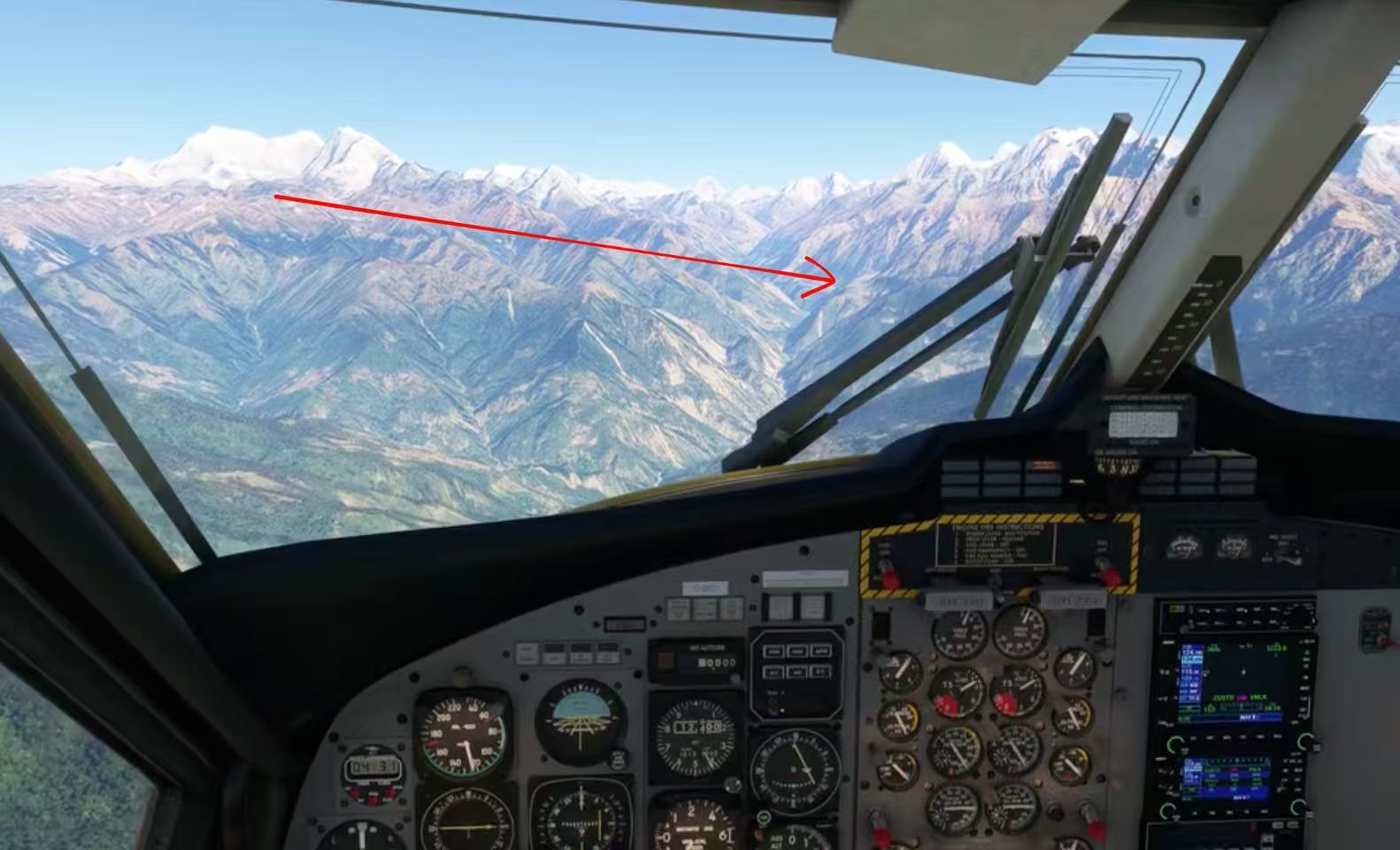
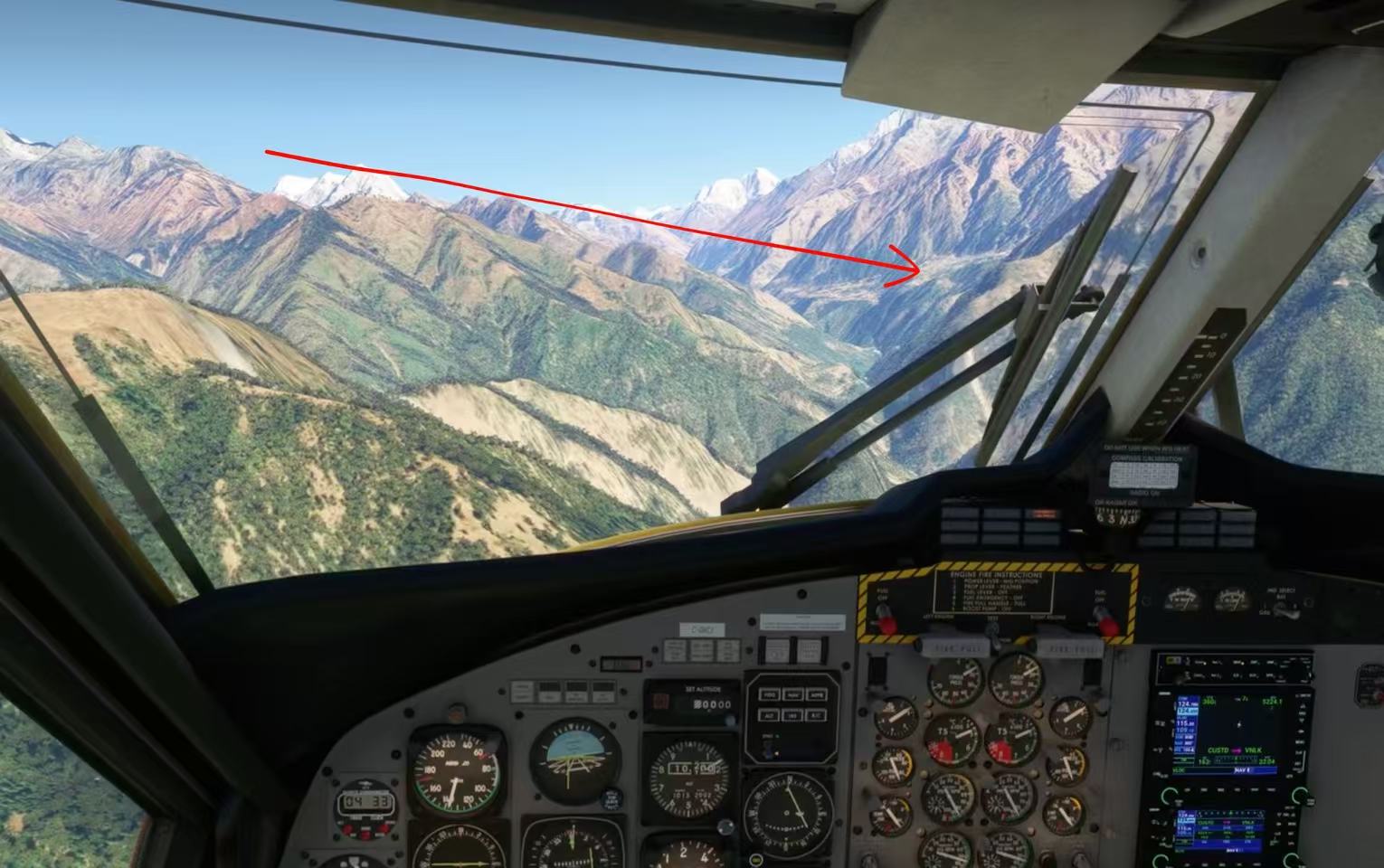
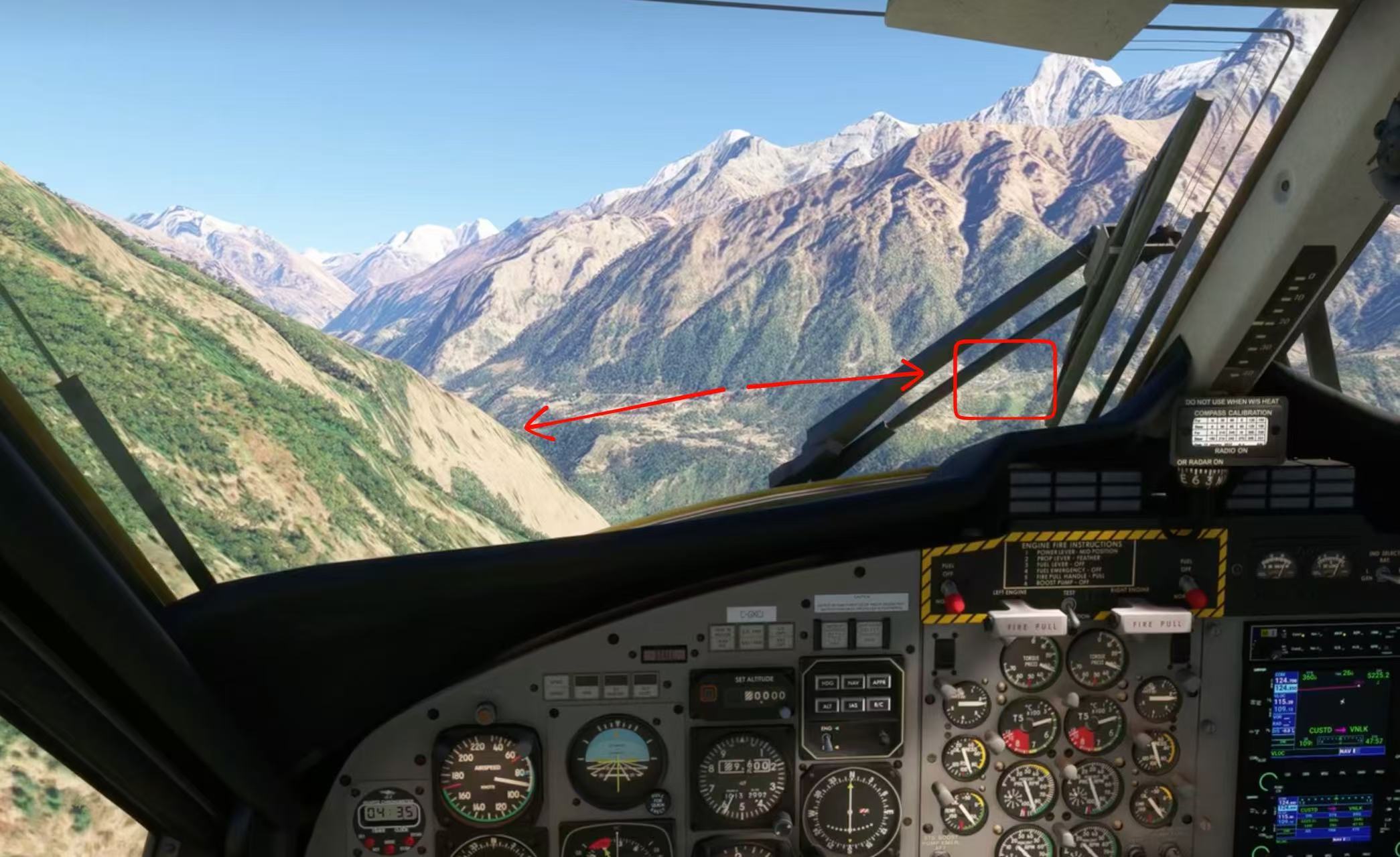
You can probably tell from the screenshots above just how nerve-wracking a visual approach into this airport is—and that’s in crystal-clear, cloudless weather.
Three airlines currently operate the Kathmandu–Lukla route, and each basically flies a single aircraft type:
- Tara Air: 🇨🇦 DHC-6 Twin Otter
- Summit Air: 🇨🇿 Let L-410
- Sita Air: 🇩🇪 Dornier 228
Anyone who plays Hearts of Iron or knows WWII history might find “Dornier 228” familiar 😂—yep, the German Do 17 was made by the same manufacturer.
I took a quick look at the airport’s accident history. The most notable passenger-plane incidents include:
- 2019: A Summit Air L-410 collided with a parked helicopter during takeoff. There were no passengers on board, though the co-pilot was killed.
- 2010: A Sita Air Dornier 228 suffered brake failure after landing and hit the wall at the end of the runway. Speed was already low, so there were no fatalities.
- 2008: A Yeti Airlines DHC-6-300 crashed on landing; everyone on board except the captain perished. The main cause was dense fog and poor visibility.
- 2005: A Gorkha Airlines Dornier 228 skidded off the runway on landing; minor injuries, no fatalities.
- 2004: A Sita Air Dornier 228 slammed its nose into the runway on landing, closing the airport for two days. No casualties as far as I know.
Also, in 2012, a Sita Air Dornier 228 suffered a bird strike right after taking off from Kathmandu, lost engine power, and crashed during an emergency landing, killing everyone on board.
So overall, the safety record isn’t terrible—Sita’s looks slightly worse than the others. There haven’t really been major crashes caused by inherent aircraft defects; it’s mostly human error and weather.
Kathmandu -> Lukla
We were originally booked on the 7 a.m. flight from Kathmandu to Lukla on March 10, but the day before we got an email bumping us to the 10 a.m. Tara 121 (the fourth flight of the day). When we asked the staff what happened, they said earlier flights had been canceled so ours got pushed back—though we could show up a bit early to wait in line, and if an earlier flight had open seats, they’d put us on it.
We got to the airport at 8 a.m. and chatted with people in line, only to learn that the weather on the 9th had been awful and every flight had been canceled. Today’s weather was actually fine, but because Kathmandu only has one runway, planes were stuck in a massive queue. By 11 a.m., even the second flight of the day hadn’t taken off yet. The first flight was supposed to leave at 6 a.m. and didn’t actually depart until around 9 a.m.
Our Flight 121 was fourth in line, and by 11 a.m. the staff confirmed we definitely weren’t flying today. They rebooked us onto tomorrow’s 6 a.m. first flight. Fingers crossed for tomorrow 🙏.
When I bought the ticket, I already figured this route had a high chance of delays, so I specifically paid with a credit card that has flight delay insurance. Before leaving the airport, I asked the staff for a delay certificate to see if I can file a claim 😂.
We headed back to Thamel, took a quick afternoon nap, grabbed coffee and dinner, and turned in early—tomorrow meant waking up at 4:30 a.m. to be in line at the airport by 5:00 a.m.
The next day (March 11), we arrived at the airport just after 5 a.m., waited about 10 minutes outside until the doors finally opened, and checked our bags around 6 a.m. After that, whether we’d fly—or when—was anyone’s guess. Passengers from the other two airlines were all packed into the same waiting hall, just sitting around… Finally, close to 10 a.m., boarding started in waves. Ours was one of the later ones in that batch, and around 10:30 a.m. we were finally airborne.
The whole ordeal was so absurd that we started making up jokes about it:
- The hardest pass on the EBC trek is the boarding pass to Lukla.
- The hardest pass to climb on EBC is the boarding gate in Kathmandu.
A few final tips for catching this flight:
- From Thamel to the airport takes about 20 minutes without traffic. Download inDrive for a ride—it’s around 500 NPR one way.
- Make sure you go to the Domestic terminal; it’s a bit of a distance from the International terminal.
- Your exact flight number doesn’t matter much—if an earlier flight has empty seats and you’re already at the airport, they can usually bump you onto it.
- Once you’re at the airport, go straight to the counter and ask for the current status. Small-plane operations are super unpredictable, so talking directly to the staff is always best.
- Lukla Airport has a live webcam where you can check real-time weather conditions.