Ethiopia (2016)
11 Aug, 2025 | ~2300 words | Also available in: 中文
As usual, let’s start with the travel map. We flew from Addis Ababa in the center to both the north and the south, so please ignore the lines in between.
Also, aside from “Southern Tribes” and “Addis Ababa” which were written in 2025, the rest of this post was written back in 2016—so keep in mind that some info may be outdated.
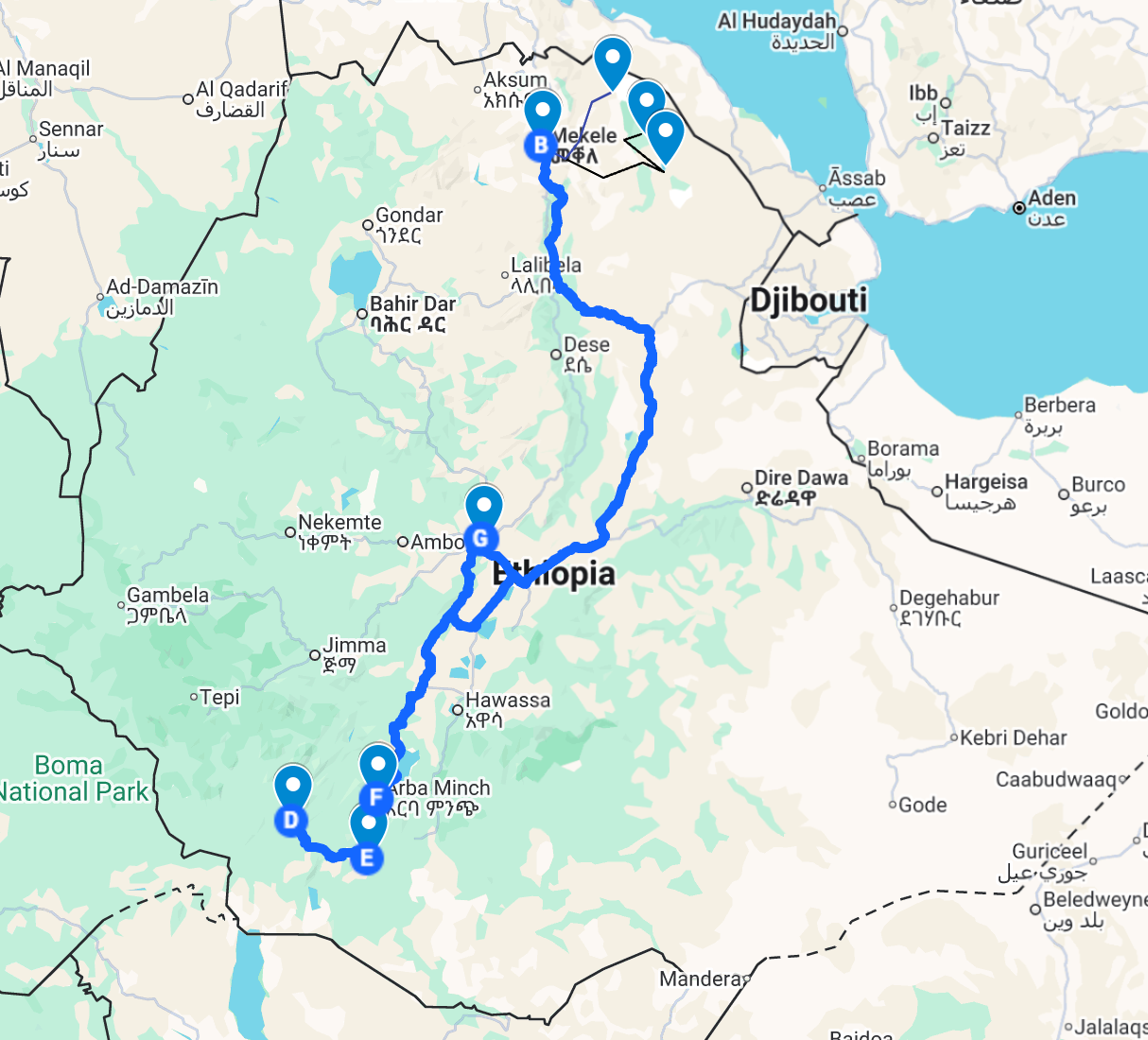
Table of Contents
Ethiopia Background
Located in sub-Saharan northeast Africa, Ethiopia is a very poor country. How poor? GDP per capita is around $500, compared to $7,000 for China and $15,000 for Shanghai. Ethiopia ranks 177th out of 188 countries on the HDI (Human Development Index)—being born here is basically spawning on Impossible difficulty…
On top of that, Ethiopia was having border skirmishes with Eritrea to the north (how many people have even heard of that country?), so when we visited the north, we had armed soldiers escorting us the entire time. Fun fact: Ethiopia defeated the Italian army during WWII. Another fun fact: Ethiopian Airlines is the largest airline in Africa and actually has a pretty solid reputation.
So what is there to see in a place this poor? In short: volcanoes in the north, and tribes in the south.
Visa
Getting the visa was a huge headache. On paper, Ethiopia offers visa-on-arrival for Chinese citizens, but Chinese border control doesn’t recognize it, so you can’t exit China directly and have to transit through a third country. Plus, the Chinese Embassy in Ethiopia had announced the year before that you couldn’t actually get the visa on arrival (though word is it works again recently).
Meanwhile, if you apply at the consulate, the visa officer will try to turn you away saying you can just get a visa on arrival—so it really comes down to how well you can sweet-talk them in person. Luckily I’ve got the gift of gab: I poured my heart out to the visa officer about my deep longing to visit Africa, and walked away with a visa for just over 200 RMB.
Taobao agencies also offer visa services, but the ones I asked all quoted a flat 3,500 RMB per person—pure highway robbery.
Addis Ababa
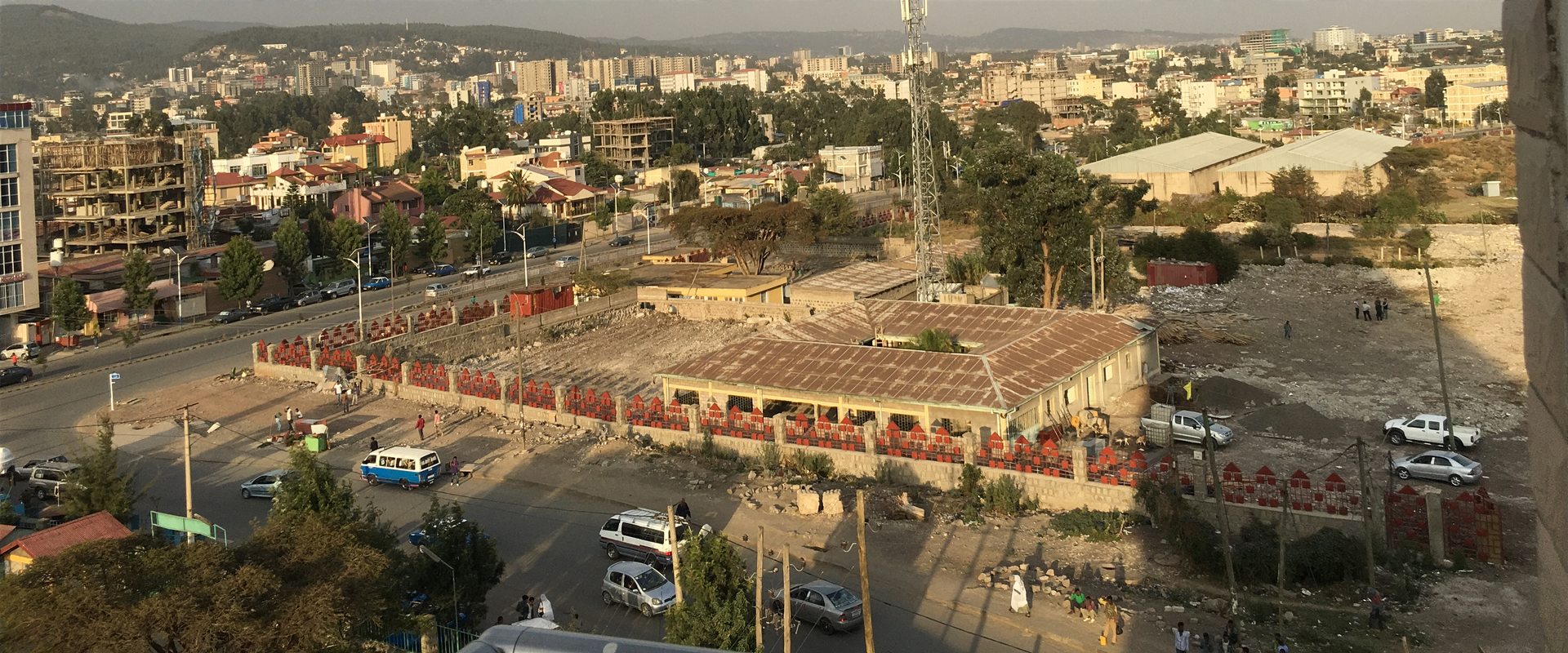
This tongue-twister of a name (Addis Ababa) is Ethiopia’s capital. Outside of Civilization players, probably very few people have heard of it. Even back in 2016, though, there were already quite a few Chinese people here doing business. What’s the capital like overall? Roughly like a small county town outside Chengdu circa 2005—except on average with worse safety and sanitation. Ethiopia isn’t really a tourist country, so locals still rarely see foreigners. Especially when they see East Asian faces, they’ll stare at you without even trying to hide it (no malice, just curiosity). The city is pretty featureless—I couldn’t even find a single good photo to post. Maybe this one below best captures the overall vibe of the place.
There isn’t much to do here; it’s basically just a transit hub. If you really want to do something, you can stop by the African Union headquarters for a photo, or go buy some local Yirgacheffe coffee. Ironically, though, Ethiopia exports all its best coffee, so what you end up buying in local shops is actually pretty low quality.
Northern Volcano
The volcano up north is called Erta Ale, also known by the local Afar people as the “Gateway to Hell” (Turkmenistan has one of those too). What makes it truly, uniquely insane is that the crater has a permanently churning lava lake, and you can stand just 2 meters from the rim to feel the molten lava rolling right beneath you. Please enjoy my hand-drawn diagram:

As for what the volcano actually looks like—enough talk, here are photos and a video.

The volcano sits in the Danakil Desert in the northern Afar region. Back in 2012, several European tourists were kidnapped there, so nowadays you’re required to have government soldiers accompany you. Our group of 5 tourist vehicles came with one truck full of armed soldiers. The trip lasted four days and covered four main sights:
- Salt Lake
- Salt Mines
- Dallol
- Erta Ale Volcano
Day 1: Salt Lake
Camel caravans on the salt flats.


Our convoy of five vehicles.

A man as free as the wind.

That night we slept out in the open—the kind of place where opening your mouth means eating a mouthful of sand… The desert wind at night was fierce too; if you weren’t careful while taking a leak, it’d blow right back on you… Below is our sleeping arrangement for the night…

Day 2: Salt Mines
Dallol is a geothermal/mining area sitting at -130m elevation. What’s it like? Just look at the photos.


Doesn’t it feel like being on Mars?
And of course, as a programmer, an obligatory “working remotely” photo:


The salt mines. One block sells for about 1.3 RMB.

A camel dreaming of poetry and distant lands.

The donkeys were actually pretty cute…

Days 3 & 4: Erta Ale Volcano
Day 3 was mostly driving; we arrived at the base camp below the volcano around 4 PM and rested for a bit. We started hiking up at 7 PM and reached the crater around 11 PM, getting about an hour to watch the volcano. Here’s what camping at the summit looked like:

As for the volcano itself, here’s another video. Honestly, for a place like this, photos and videos don’t even come close to capturing what it’s like to actually be there.
Standing at the crater rim, feeling the lava churning below, wave after wave of heat hitting your face, and hearing the gasps of everyone around you—it’s truly a once-in-a-lifetime experience.
Southern Tribes
Southern Ethiopia is home to many very primitive tribes. Even though plenty of tourists were already visiting by then, these tribes still largely held onto their traditional customs. Our guide was a young guy who had grown up in one of the tribes, so he knew all the local traditions inside out. Customs actually vary quite a bit from tribe to tribe—some are noticeably more violent than others.
The starting point for the entire southern loop is a town called Arba Minch. It has a small airport, so it barely qualifies as a southern transit hub, though the population is only around 100,000—basically a small county town back in China. Roads across the south are terrible and practically impassable during the rainy season, so the window to visit is pretty short.
Jinka
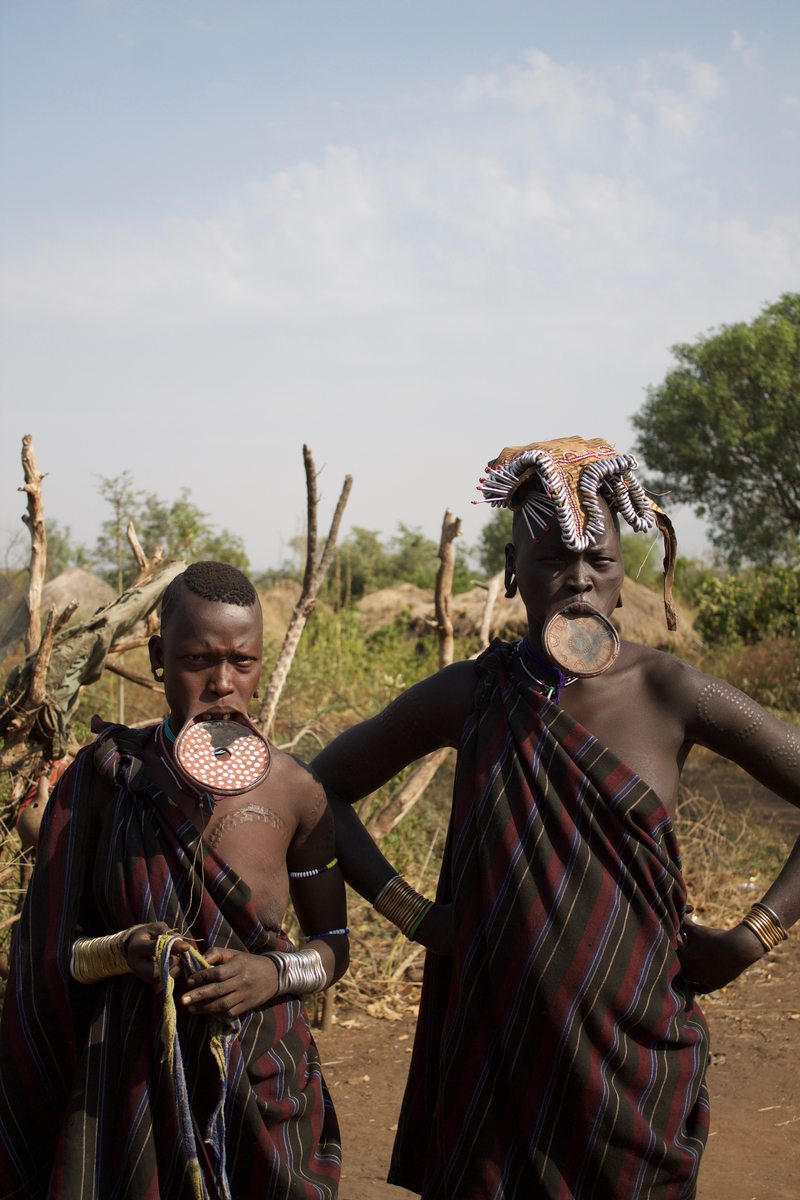
Our first stop was a place called Jinka, near the south’s most famous tribe, the Omo (often called the “lip-plate tribe” in Chinese). They slit their lower lip and insert a clay plate—supposedly the bigger the plate, the more “beautiful” you are. Compared to this, historical foot-binding in China doesn’t seem quite so extreme.
Because of poverty, they sell all the coffee beans they harvest and make a soup out of the leftover coffee husks and scraps for themselves. I took one sip—hard to even describe the taste, and somehow it was spicy…
Nearby is another famous tribe, the Hamar, whose bull-jumping and courtship ceremony is seriously intense. The bull-jumping is a coming-of-age ritual. At most one guy jumps per day, and it’s seasonal—not held year-round. Before the ceremony, the boy’s father slaughters a goat and gives it to him for encouragement. During the ritual, villagers line up several bulls side by side, and the boy leaps onto the first bull’s back and sprints across them. The more bulls you can run across without losing your balance, the more badass you are.
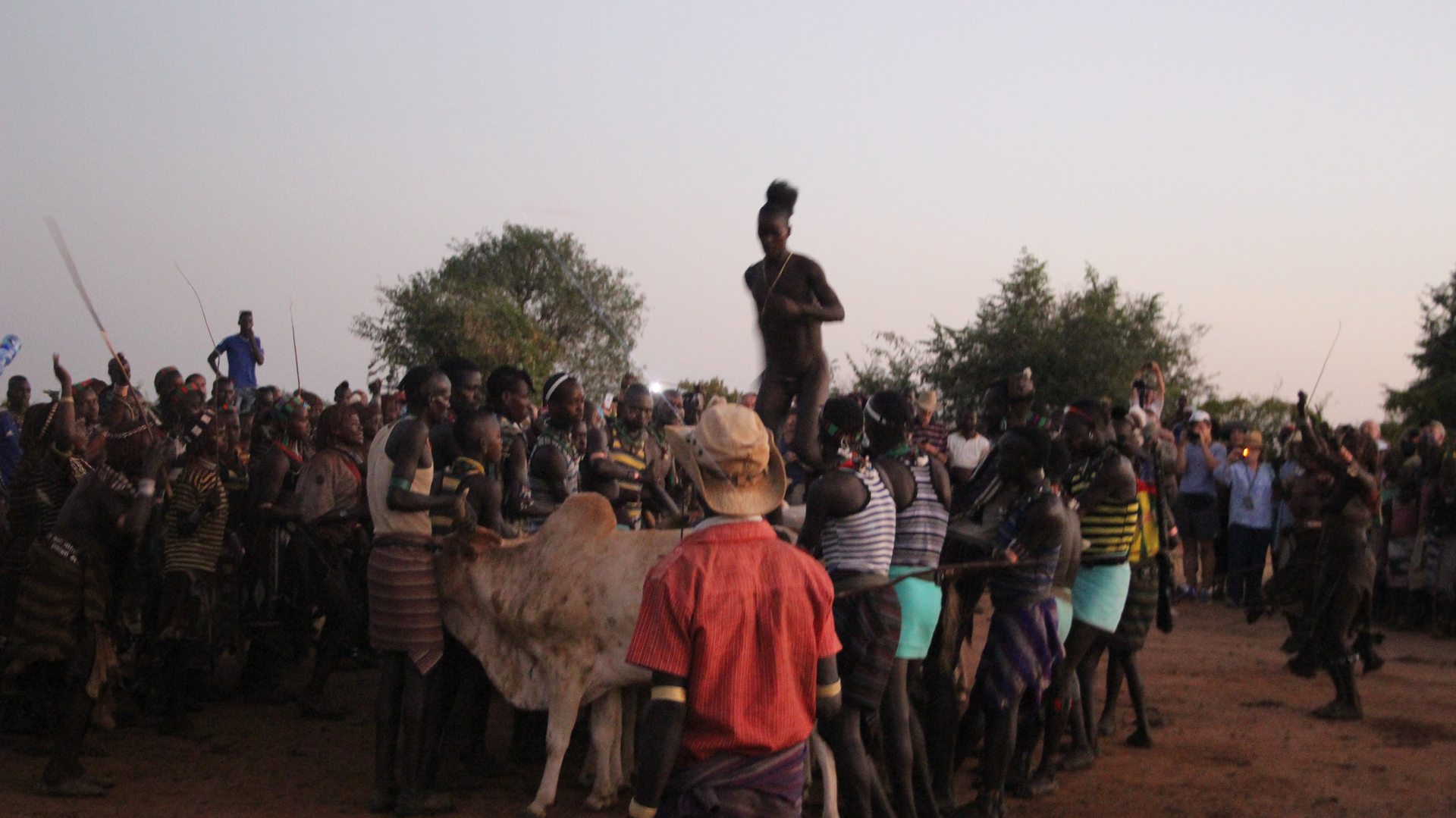
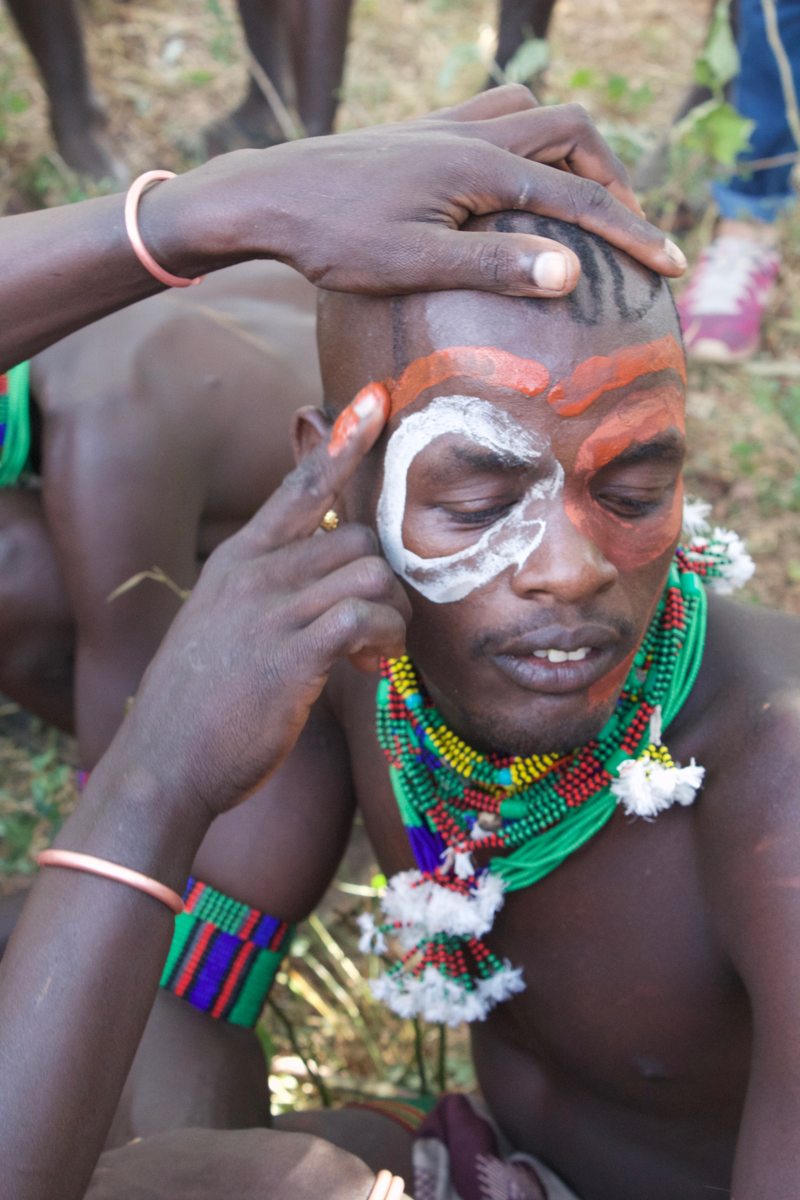
The bull-jumping ceremony also doubles as a matchmaking event. Essentially, men at the ceremony whip women they’re interested in—and if the feeling is mutual, the woman silently endures the whipping and lets him keep going. The scene was genuinely bloody: plenty of women had whip scars all over their backs, with flies buzzing around the open wounds. I won’t post any of the bloody photos here. They also paint their faces with all sorts of pigments during the ceremony (no idea what they’re made of), so I’ll just share this photo instead.
Besides the tribes, there’s a small local market nearby—kind of like the rural market days we used to have in China. You can see super rustic stalls selling everyday goods. Probably because of tourists, quite a few stalls also sell souvenirs clearly made for visitors. They don’t have Yiwu here, though, so everything is 100% handmade, with wildly inconsistent quality.
Kara
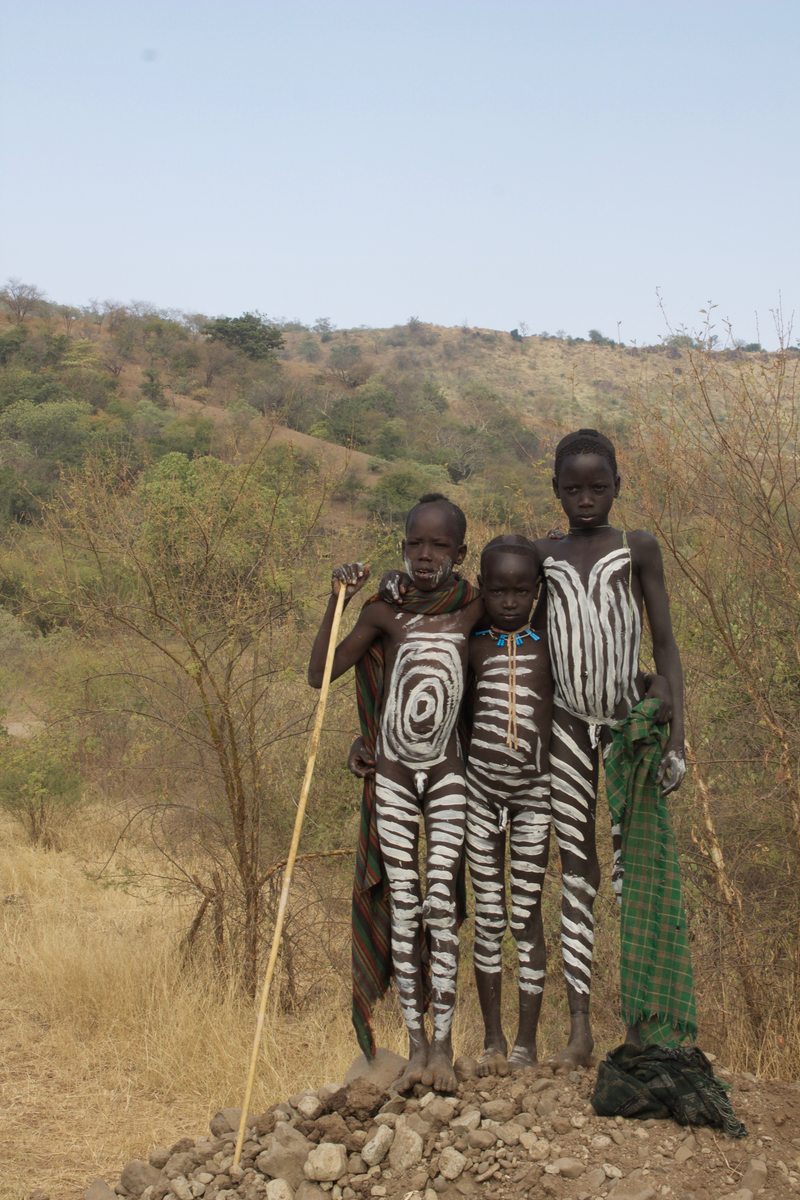
This tribe is also big on body painting—along the road we saw a few kids with horizontal white stripes painted all over their bodies, looking just like skeletons. Another funny observation: lots of people in the tribe casually carry around primitive wooden sticks (not sure if it’s for self-defense), yet randomly, one or two guys dressed the exact same way will be carrying an AK-47… Definitely gave off “shooting down an airplane with a bow and arrow” energy.
Konso
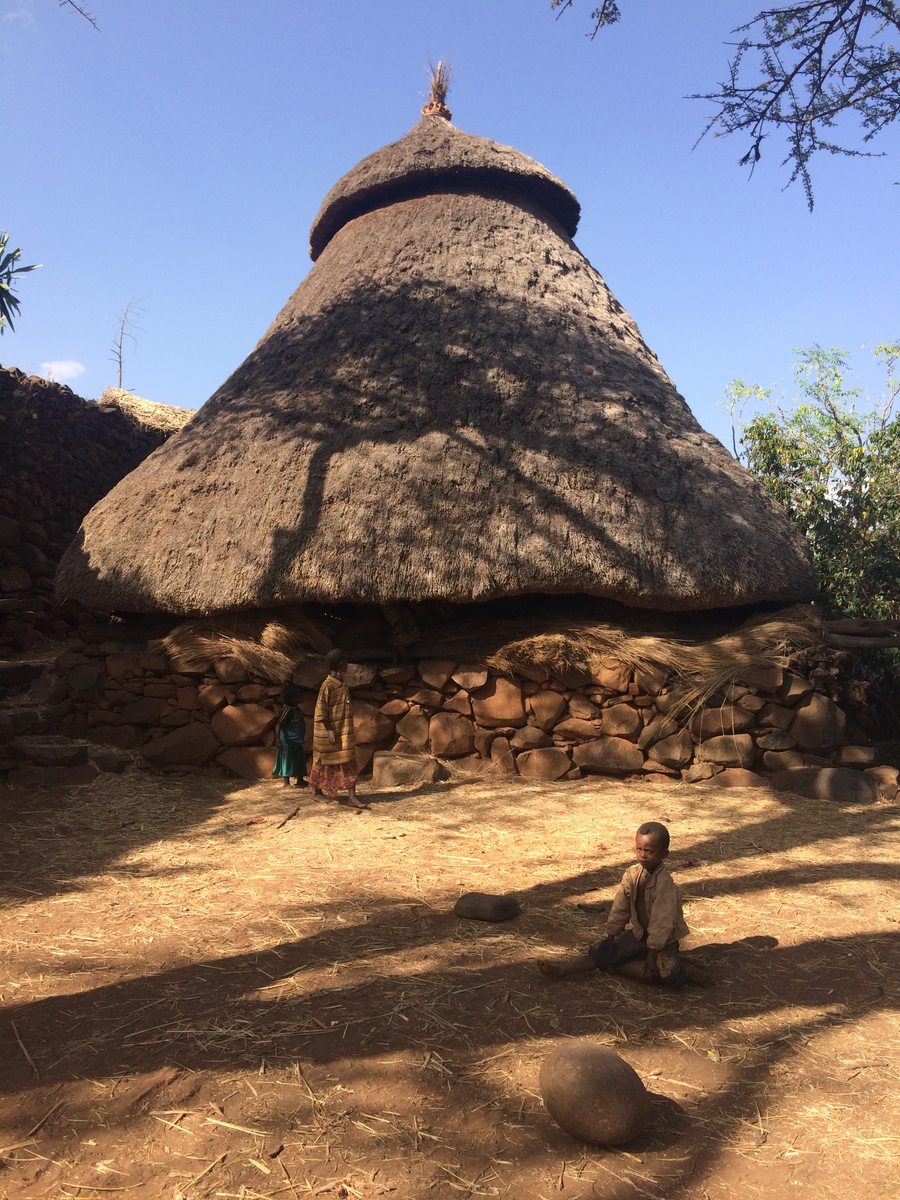
Next up, the Konso tribe was a bit more “artsy”—we mainly checked out their thatched huts. Have to say, those houses were actually pretty cute, looking just like the village huts from Age of Empires I. You can tell the architecture has been refined over millennia, probably keeping cool in summer and warm in winter. People here do wear traditional outfits, though it felt much more like the ethnic minorities we’re familiar with rather than an isolated primitive tribe. Their coming-of-age ritual is also pretty fun: you have to go to the village center and lift a 50 kg boulder. Kind of felt like pulling the Sword in the Stone…
Konso consists of 41 villages and 9 major clans. When a clan chief dies, his body is mummified and kept for 9 years, 9 months, 9 weeks, 9 days, and 9 hours, symbolizing the unity of the 9 clans. As villages slowly expand, they also build stone walls around them—guess that’s universal everywhere. Another neat tradition is their concept of a “generation,” which lasts about 18 years. For each generation, they erect a wooden pole in the village center, so you can tell how long a village has existed just by counting the poles.
Dorze
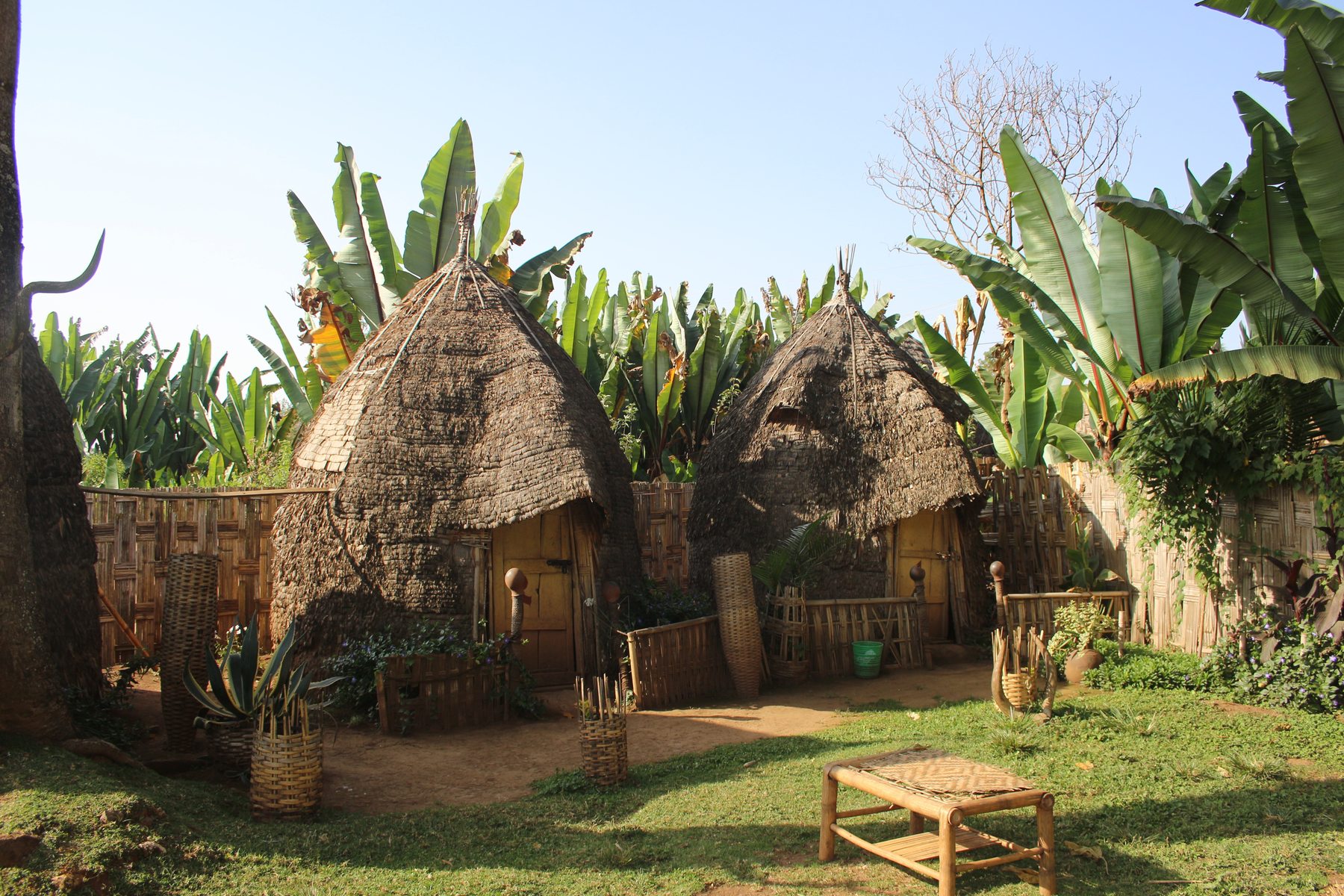
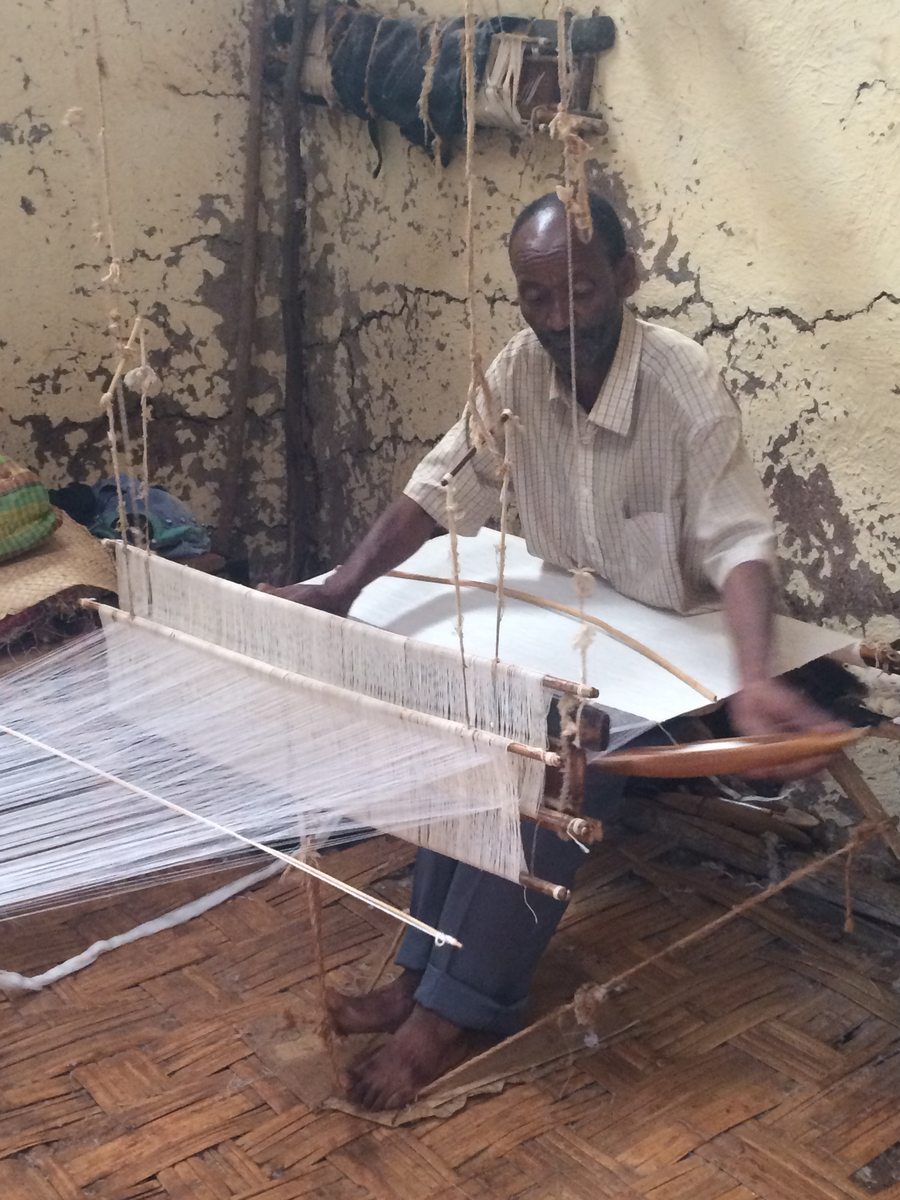
Our final stop was the Dorze tribe near Arba Minch. Probably because it’s closer to a “big city,” this tribe looked much more modern. Their houses are still thatched, but the building materials look more processed. They also have an externally funded weaving workshop where you can watch villagers weaving fabric. Plenty of villagers were already wearing collared shirts and soccer jerseys, either making food or crafting handicrafts to sell.
Takeaways
- Child labor is everywhere on the streets, and lots of kids begging.
- Many people in Addis will say “Ni hao” when they see Chinese people and greet you warmly.
- People regularly walk along highways and animals wander across; folks wave whenever they see a car.
- Tipping is supposedly customary, though in a lot of places you don’t actually have to.
- Still very poor—heard drivers only make about 50 birr a day (tough job, and they have to speak English too, though tips help).
- A bottle of Coke is 15 birr; a meal is around 150–200 birr.
- Heavy foreigner tax: taxis almost always quote 200 birr upfront, and you can immediately haggle them down to half (locals probably pay about 1/4 of that).
- Taxis are super old (look like they’re from the 1980s). About 85% of tour agency vehicles are Toyota Land Cruisers, with the rest mostly Nissans. Cars are wildly expensive here—heard importing a Land Cruiser carries a 300% tax.
- Lots of Japanese tourists; most locals guess “Japan” first when they see an Asian face, then “China”—almost nobody guesses Korea first.
- Sanitation is very poor; locals barely even notice flies, and the water is very dirty.
- China is involved in tons of infrastructure projects, so there are actually quite a few Chinese people in the capital.
- Cell reception is better than expected—even on rural roads you often get 3G.
- Generally speaking, locals love having their photos taken and get really happy when you show them the picture afterward.
- Probably due to the heat (+ poverty), almost everyone wears plastic flip-flops—even when hiking up mountains.
- Kids love pens, soccer balls, and things like that.
- Hotels aren’t actually cheap—not sure if that’s also a foreigner markup.
- Airports are super basic, though Ethiopian Airlines seems quite reliable and professional (at least compared to other service industries in the country).
- Cash is super old and smelly, even bills straight from the bank.
- Met a few travelers from Chengdu along the way. I mentioned I brought a tent and a tripod; they said they brought pickled mustard tuber (zhacai), Lao Gan Ma chili crisp, and hotpot base…
- Animals are everywhere—camels, donkeys, goats. Camels are still a primary mode of transport.
- The “highway” near Mekele is fairly new, yet there’s barely a car on it.
- Up at the northern salt flats, miners sell one salt block for 4 birr. A camel can carry 25–30 blocks; a donkey can only carry about 10.
Itinerary
2016-02-05 ~ 02-16
- 02-05 (late night): PVG -> Addis Ababa ET685
- 02-06: Addis Ababa
- 02-07: Addis Ababa -> Mekele
- 02-08: Camping
- 02-09: Camping
- 02-10: Camping
- 02-11: Mekele
- 02-12: Flight to Arba Minch and visit Dorze village, Paradise Lodge, Arba Minch
- 02-13: Eyob Hotel, Jinka
- 02-14: Kanta Lodge, Konso
- 02-15: Konso -> Arba Minch -> Addis Ababa
- 02-16 (early morning): Addis Ababa -> PVG ET684