Nepal (2017)
23 Jan, 2026 | ~1000 words | Also available in: 中文
This post covers the travel portion of my 2017 trip to Nepal for the ABC trek. Most of it was written back in 2017, and I finally cleaned it up and published it in 2026.
Itinerary
- 2017-09-23: Chengdu -> Kathmandu -> Pokhara
- 2017-09-24 ~ 10-01: In the mountains
- 2017-10-02: Pokhara
- 2017-10-03: Pokhara
- 2017-10-04: Pokhara -> Kathmandu
- 2017-10-05: Kathmandu
- 2017-10-06: Kathmandu -> Lhasa -> Chengdu
Kathmandu
The scenery of Nepal actually starts right from the plane. Guess which one is Mount Everest?

Taking off from the Chengdu Plain, you watch the view transition from cities and flatlands, to the rugged Tibetan Plateau, and finally to the snow-white expanse of the Himalayas. It’s truly stunning—make sure to get a window seat on the right side.
Kathmandu Airport truly lives up to its reputation as the worst airport. It’s total chaos, with suitcases stacked everywhere. Strangely enough, a ton of people at the airport were checking in Sony TVs.
Kathmandu as a whole is actually pretty big, and chaotic everywhere (much more chaotic than Pokhara). There are very few traffic lights, so crossing the street basically comes down to charging across. On this trip I was mostly just passing through Kathmandu—I flew straight to Pokhara the day I arrived, then stayed two nights after finishing the ABC trek. The only sights I really visited were the central Durbar Square and Swayambhunath Stupa.
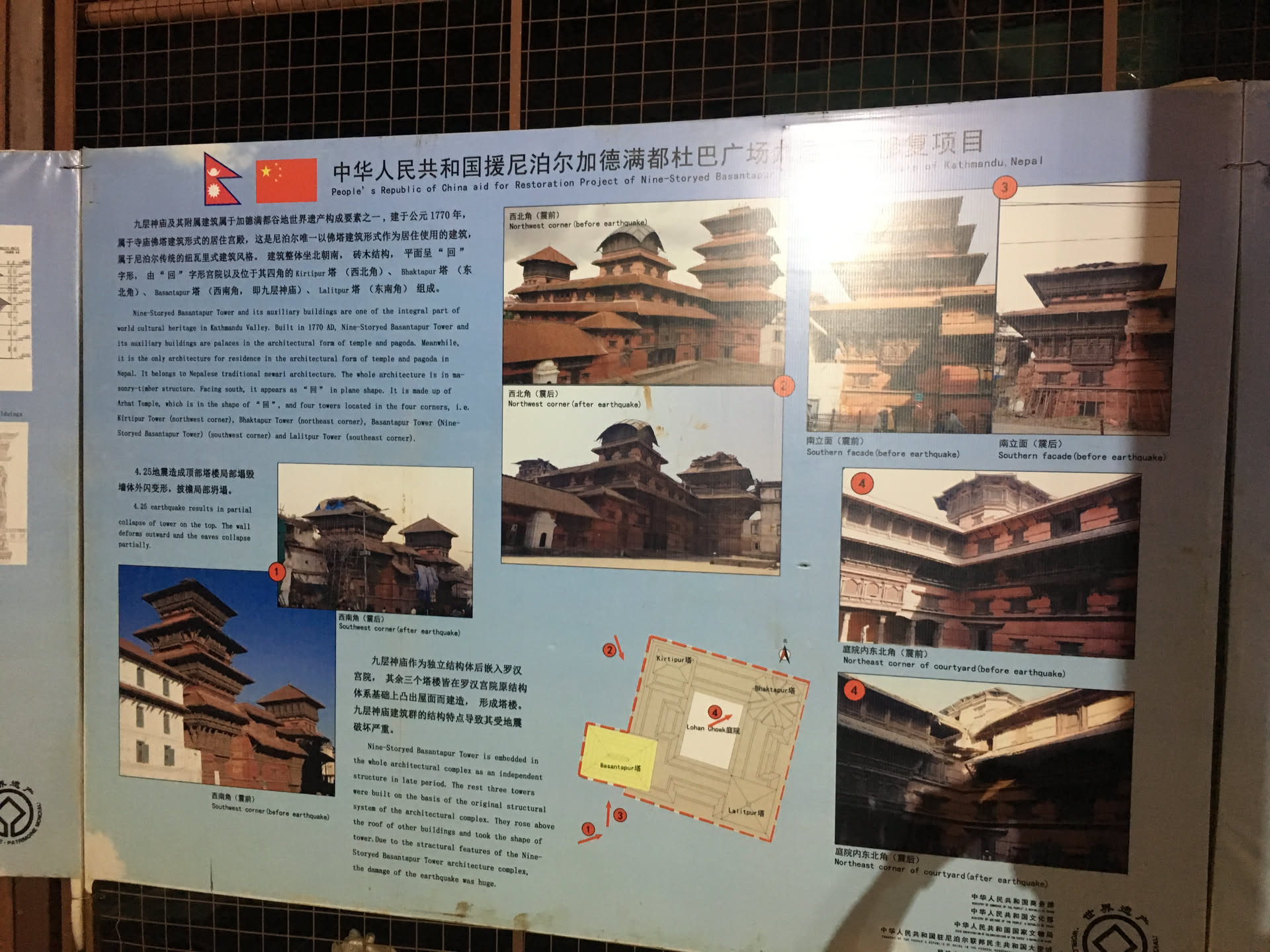
However, Durbar Square was heavily damaged in the 2015 earthquake, so there wasn’t much left to see. As for Swayambhunath Stupa, for someone without religious beliefs, it didn’t really feel all that special.

What actually ended up being the best part of Kathmandu was meeting up with a former Nepali intern from our company who happened to be back in town. We grabbed dinner and chatted about all sorts of things. The Thoughts and Impressions section at the end is basically a collection of things we talked about.
Pokhara
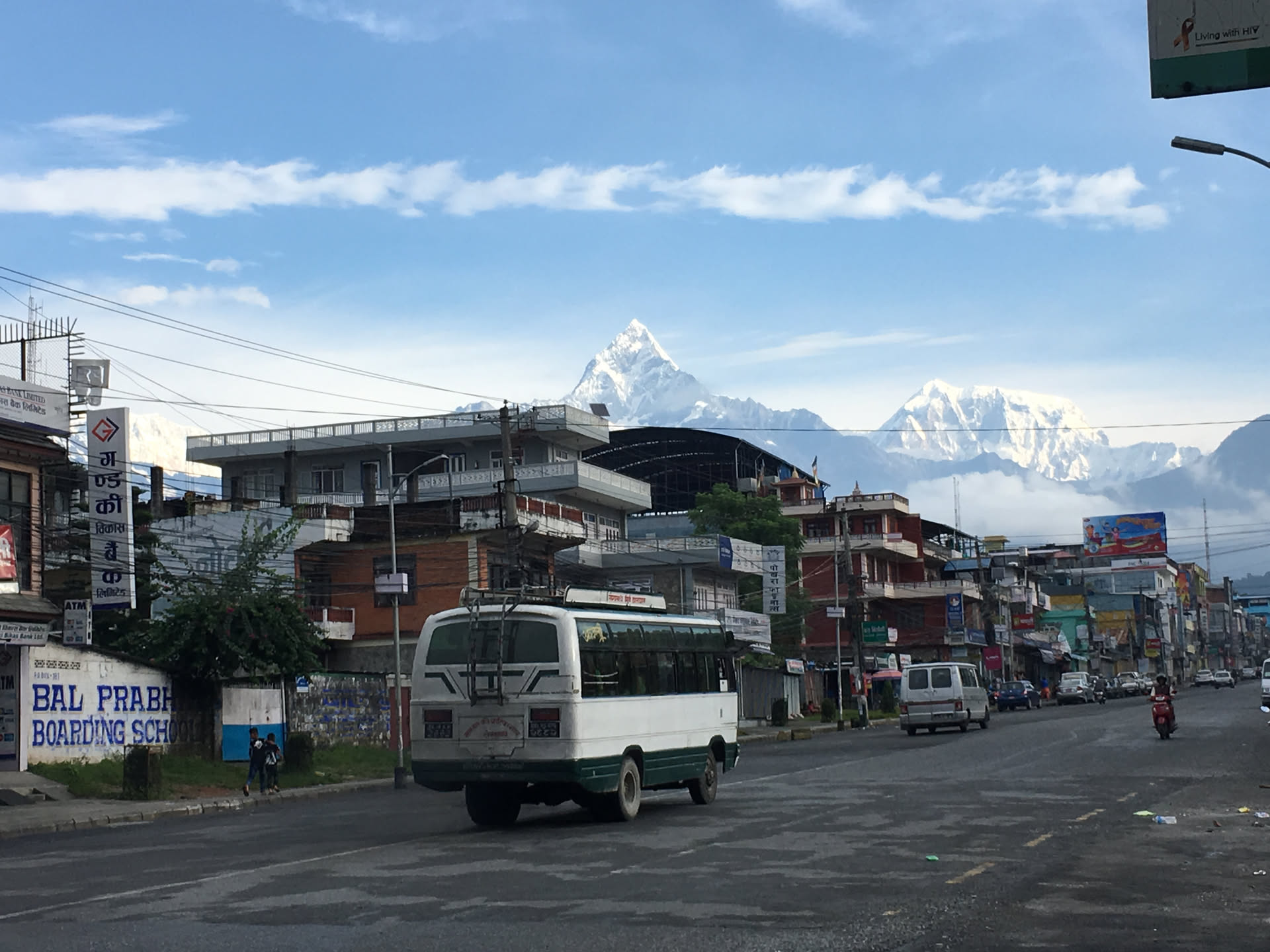
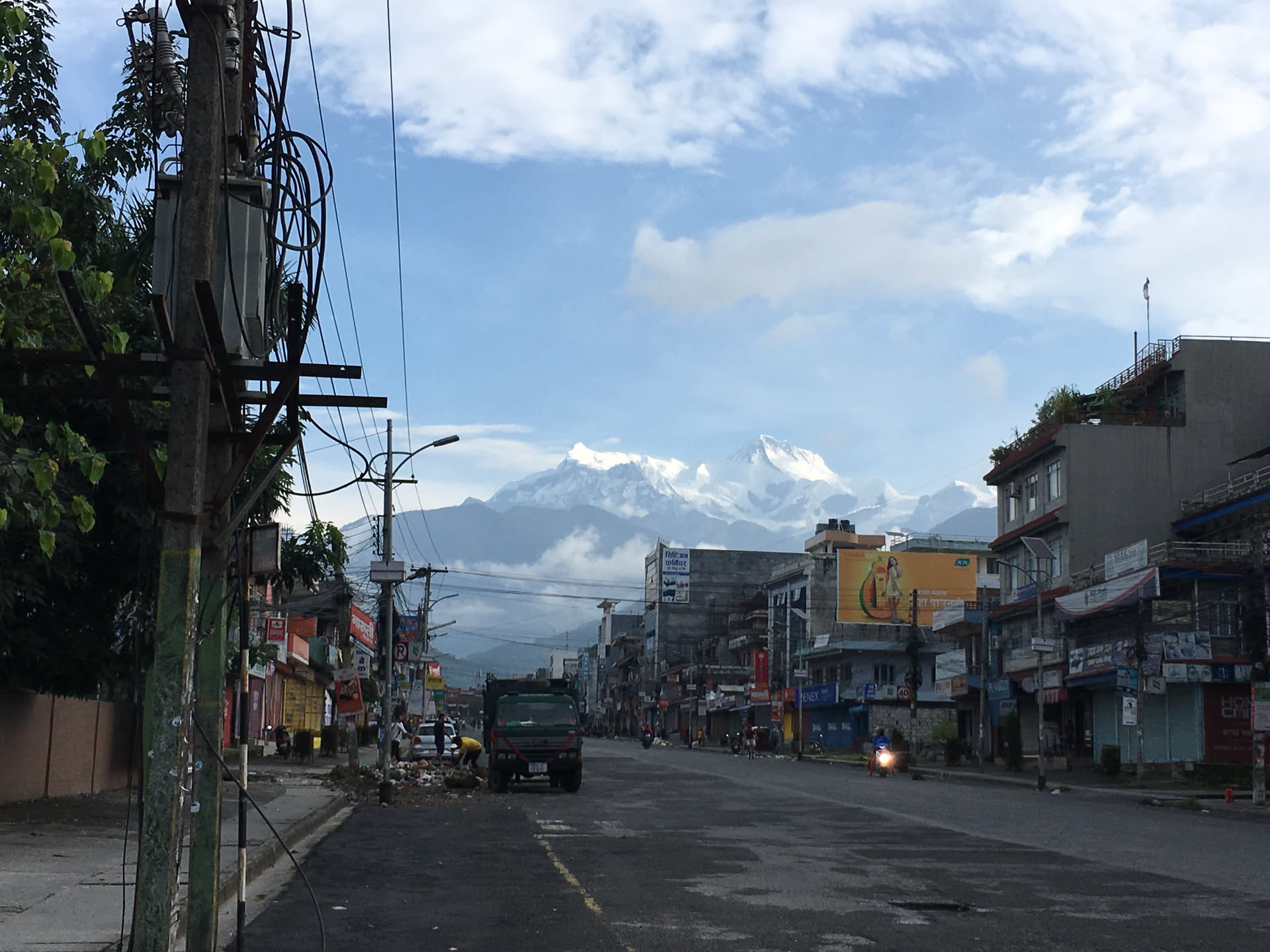
The most mind-blowing thing about Pokhara is that while it’s not a huge city, it still has plenty of signs of modern civilization—yet when you look out from the city center, you’re staring straight at 6,000- and 7,000-meter peaks, practically the highest places you can see on Earth. That contrast is really hard to put into words; it makes you feel like you’re standing right on some boundary between humanity and nature.
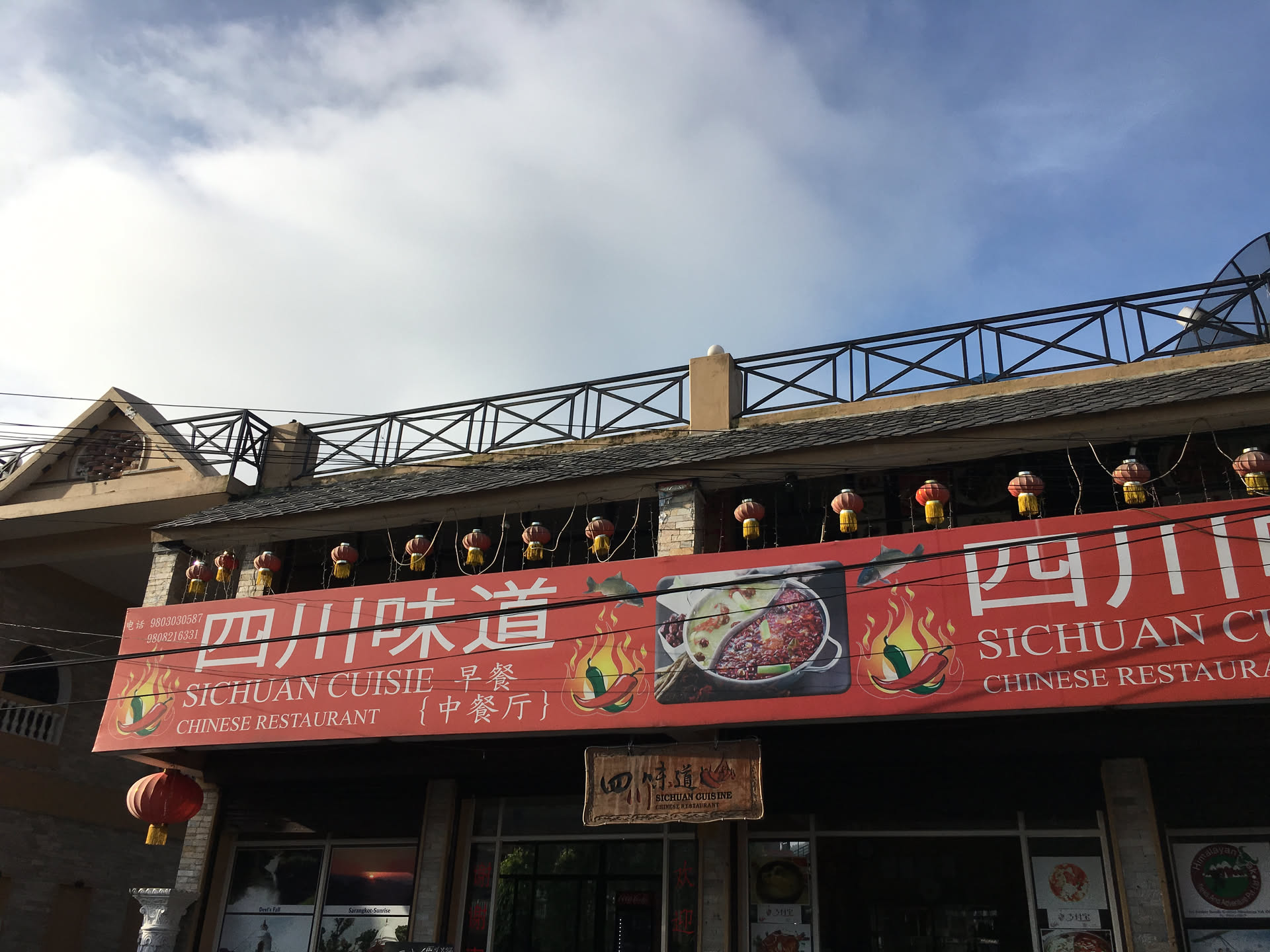
Probably because there are a lot of Chinese tourists—or plenty of Chinese people doing business in Nepal—you see Chinese signage quite often here, and quite a few places even accept RMB directly…
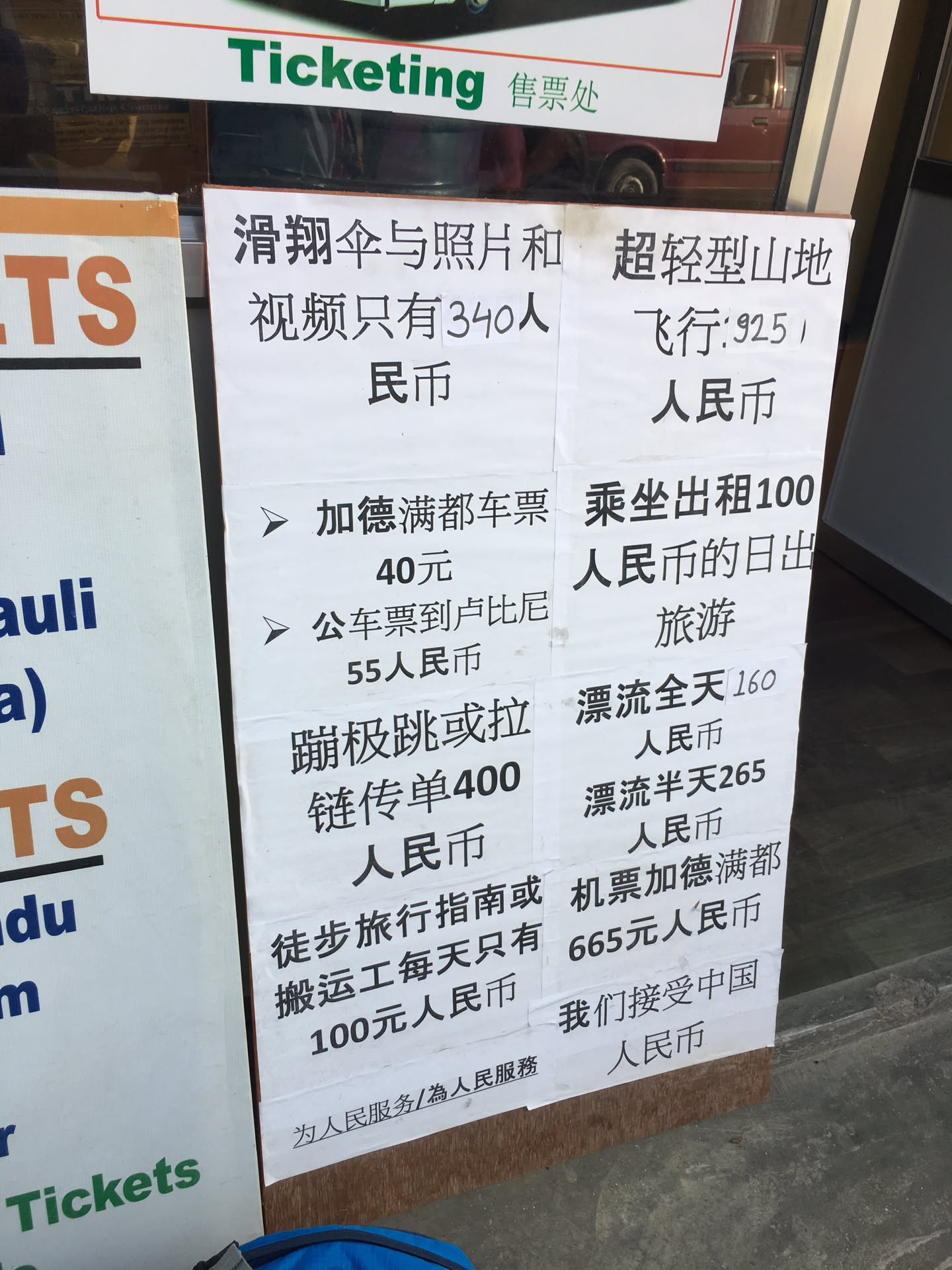
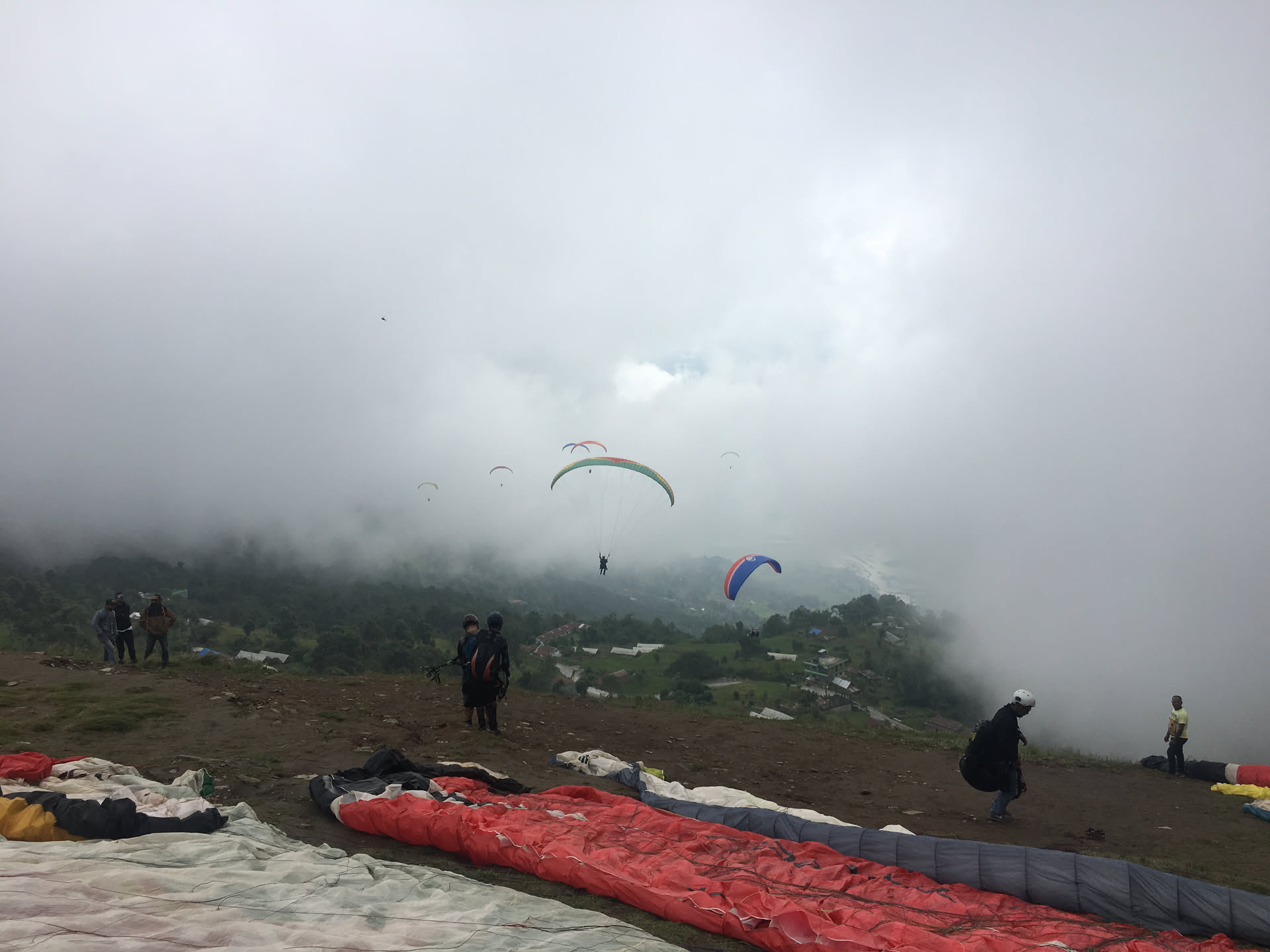
As for sightseeing in Pokhara itself, paragliding and Phewa Lake are pretty famous. Paragliding seems to be famous purely because it’s cheap… I haven’t gone paragliding anywhere else, so I can’t compare, but at around 300 RMB here, the value for money is probably unbeatable. My tandem pilot was a Turkish guy—pretty wild that someone from Turkey would come work here. It was quite cloudy that day so visibility was mediocre, and the whole flight lasted about 10 minutes. Afterward I grabbed some food by Phewa Lake, went boating for a bit, and basically called it a day.
Too bad I didn’t take many photos around town, so I don’t have any street shots. From what I remember, the few streets along the lakeside got super lively at night, packed with tourists from all over the world (tons of Chinese and Koreans, strangely almost no Japanese). There’s even a KFC right in the center—worse than the ones in China, though it might count as “upscale dining” of sorts here, since we saw local young women taking tons of selfies in KFC to check in on social media. The street also had lots of banks and mom-and-pop convenience stores, yet surprisingly few places to eat.
Taking the bus from Pokhara to Kathmandu is only a little over 200 km, yet it took a full 8 hours. The last 30 km before entering the city alone took nearly an hour and a half—absurd. This highway was apparently built by China many years ago, but while the road got built, there wasn’t enough money to maintain it afterward, so now it’s fallen into total disrepair.
Thoughts and Impressions
- A bus driver makes around 10,000 NPR a month; a top university graduate makes around 30,000–40,000 NPR; my friend works as a software engineer at CITIC Group and makes close to 10,000 RMB a month.
- Housing is expensive—a nicer apartment costs close to 1 million RMB. The 3-bedroom apartment he rents is $1,200 USD a month, plus cleaning fees, utilities, etc.
- Nepali is very similar to Hindi—both the script and vocabulary are quite close, just pronounced differently. Most of Nepal’s trade is with India, yet neither the government nor the public has a particularly favorable view of India, out of fear that India might annex Nepal. He even suspects the 2001 royal massacre was an Indian conspiracy to topple the Nepali government and absorb the country (similar to how Sikkim was annexed).
- Most people are Hindu, so they don’t eat beef.
- Car taxes are sky-high (around 210%). A tiny sedan costs around 120,000 RMB, and even the most basic compact SUV runs about 300,000 RMB.
- Kathmandu used to have frequent power outages, though after a change in government, things have gotten much better.
- The military holds a lot of power, but in the eyes of the public, the army gets things done more reliably than the government and enjoys a pretty good reputation overall.
- Wealthy local youth all go abroad to study and stay there. Australia and South Korea are the most popular destinations.
- Apart from Nepali language class itself, most school textbooks are in English, so educated locals generally speak pretty good English (probably better than the average in China).
- Even though that intern had lived in China for many years, he thought Oppo was an Indian brand, because all the Oppo ads feature Indian actors.