Tibet - Kula Kangri Trek
28 Oct, 2026 | ~2900 words | Also available in: 中文
The first time I visited Tibet was literally 20 years ago in high school (back in 2006). The Qinghai–Tibet Railway had just opened, and I took the train from Xining to Lhasa with my dad and a few of his friends. As I recall, we spent two nights on the train—all in all, a very long journey. Even though it was my first time on the plateau, being young plus ascending gradually by train meant I had almost zero altitude sickness. The only time I felt the altitude at all was at Namtso, when climbing a tiny hill left me noticeably more winded than on flat ground (ah, the joys of youth!).
On that first trip, I only stayed in Lhasa for two days and visited one monastery in Shannan (don’t remember the name) plus Namtso. We didn’t even manage to get tickets for the Potala Palace. I was too young to keep proper notes, so my biggest impression of Tibet from back then was probably just how many flies there were 😂. If I remember right, we stayed at the Lhasa Hotel, and I vividly remember the hallways being full of flies…
Coming back to Tibet this time happened by a twist of fate. Earlier this year, after I got back from EBC, a friend in Chengdu commented that I should check out “Kula Kangri” next time. I’d never even heard of the place before. I looked it up and saw videos by Links and Li Xian—it looked really gorgeous, though I still didn’t think I’d actually go. When I went back to China in September, my original plan was to climb a 5,000m+ snow mountain like Haba Snow Mountain. Somehow, while brainstorming with friends, we ended up deciding on trekking Kula Kangri instead 😂.
The starting point for the Kula Kangri trek is Cuoyu Village in Lhozhag County, Shannan, Tibet. It’s only 360 km from Lhasa, but because the roads get pretty rough later on, the drive actually takes at least 8+ hours. There are three trekking routes starting from Cuoyu Village, ranked by difficulty: Jiejiu Tso < Baimalin Tso < Zhegong San Tso (Three Zhegong Lakes). Originally, we planned to stay two nights in Cuoyu Village, do a full long hike on the first day, then a shorter hike on the second day before driving back to Lhasa. Once we took a serious look at the driving time, though, we realized that driving plus stopping to sightsee along the way really takes a whole day each way. So we decided to hike for just one full day in the middle, and spend the two travel days enjoying the sights en route.
Itinerary
- 2026-10-14 Day 1: Lhasa - Potala Palace
- 2026-10-15 Day 2: Lhasa - Drak Yerpa Monastery
- 2026-10-16 Day 3: Lhasa -> Cuoyu
- 2026-10-17 Day 4: Kula Kangri Trek
- 2026-10-18 Day 5: Cuoyu -> Kajiu Monastery -> Lhasa
- 2026-10-19 Day 6: Lhasa - Jokhang Temple
Day 1: Lhasa - Potala Palace
My flight was at 7:50 AM, so I landed in Lhasa before 11 AM. This was my first time flying directly to high altitude (jumping straight from Chengdu at 700m to Lhasa at 3,600m). Not sure if it was psychological or an actual physical reaction, but I felt short of breath before I’d even walked off the jet bridge 😂. By the time I picked up my luggage and spoke a few sentences, it was even more obvious—no exaggeration, I literally had to pause mid-sentence to catch my breath. Right outside the terminal, I already saw a young guy squatting on the ground looking miserable, with his girlfriend comforting him 😂.
Lhasa Airport is about 70 km from the city center, roughly an hour whether you take the shuttle bus or a taxi. A local friend warned us that airport taxis can be sketchy, so we took the shuttle bus (¥30 per person, very comfortable) into town. It’s highway all the way from the airport to the city, flanked by classic mountain valley scenery. There aren’t many towns in between, just occasional clusters of high-rises that all look brand new.
Downtown Lhasa also feels super, super new—aside from the very core of the old city, pretty much everything around it looks newly built. The whole city feels like a typical Chinese third-tier city, except much cleaner and tidier. Drivers in Lhasa are also surprisingly law-abiding (my friend said it’s because there are tons of traffic cameras), easily beating 90% of inland Chinese cities in that regard.
After a quick lunch, we headed to the Potala Palace. You need to reserve tickets in advance, as entry is capped at 5,000 people per day. When I tried to book ahead of time, it was already sold out—I only managed to snag tickets from the daily batch of cancelled reservations. Mid-October isn’t even peak season, so definitely book your tickets early if you plan to go.
Because the Potala Palace is huge, it didn’t actually feel that crowded. We hired a private guide at the entrance for ¥350 (for the two of us). For some reason, guides are limited to entering the Potala Palace only once per day—maybe to create more jobs or to keep tour quality up? Anyway, we entered around 1:30 PM, spent almost an hour checking out the museum near the entrance, and didn’t actually start climbing up into the palace until about 2:30 PM. The entire Potala Palace is built along the mountainside, so the tour route is uphill the whole way, with maybe 100–200m of elevation gain. You can imagine how someone visiting high altitude for the first time, marching straight up the Potala Palace right off the plane, could easily get hit with altitude sickness and end up back at the hotel on oxygen.
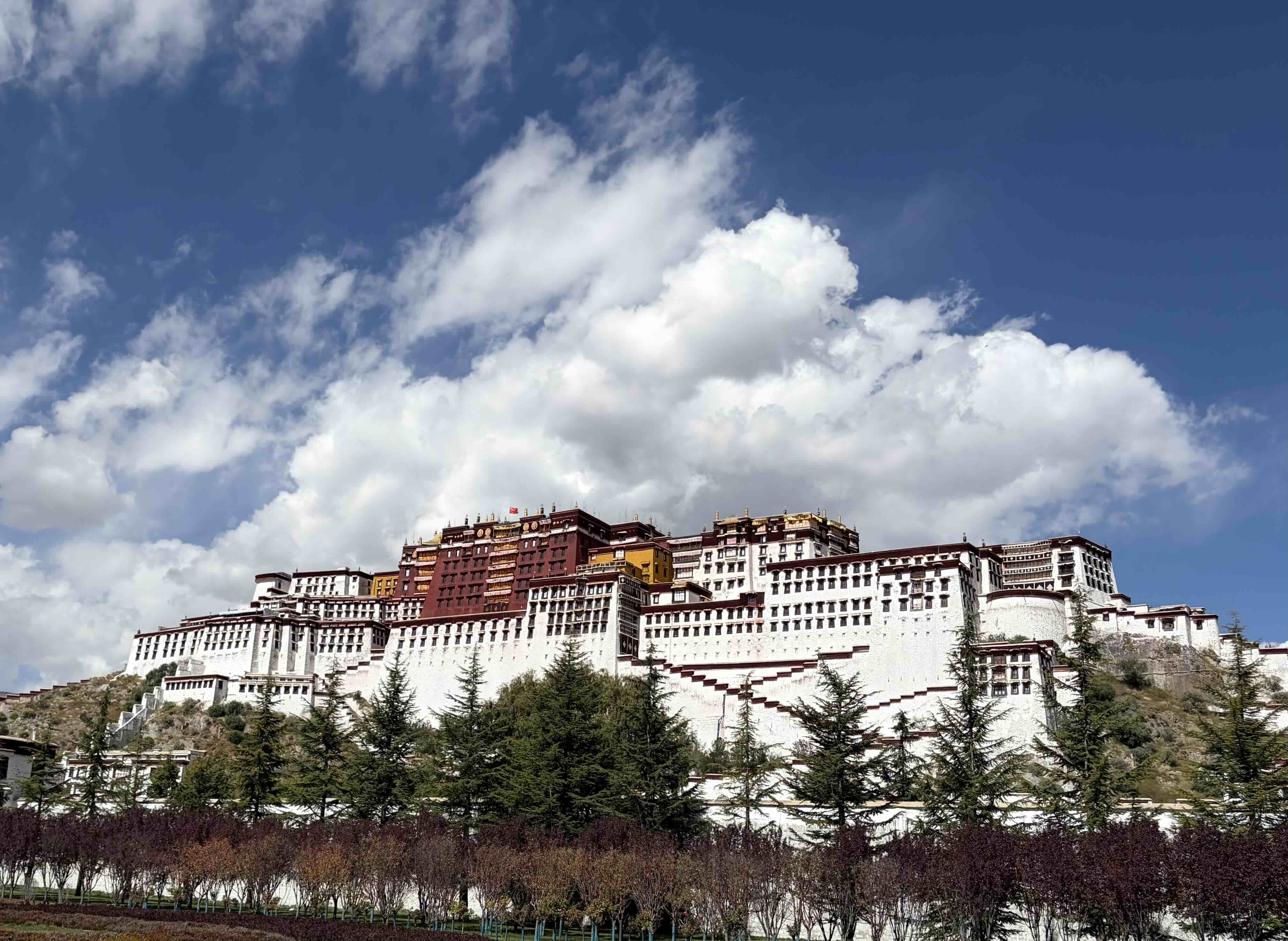
I won’t go into the details of the tour—I’m not really into religion, so I just looked around and listened to learn a bit of something new. Plus, I wasn’t a big fan of our guide’s style, so the overall experience wasn’t quite as great as I’d hoped.
By the time we finished at the Potala Palace, it was already 5 PM, and I could clearly feel myself getting sleepy (classic altitude sickness) with a mild headache. Our local friend took us to a café called “Ningdu” (柠渡)—basically coffee infused with local Tibetan elements like butter tea, yak cheese, and highland barley. There are also a few nice little shops around there if you want to browse for souvenirs.
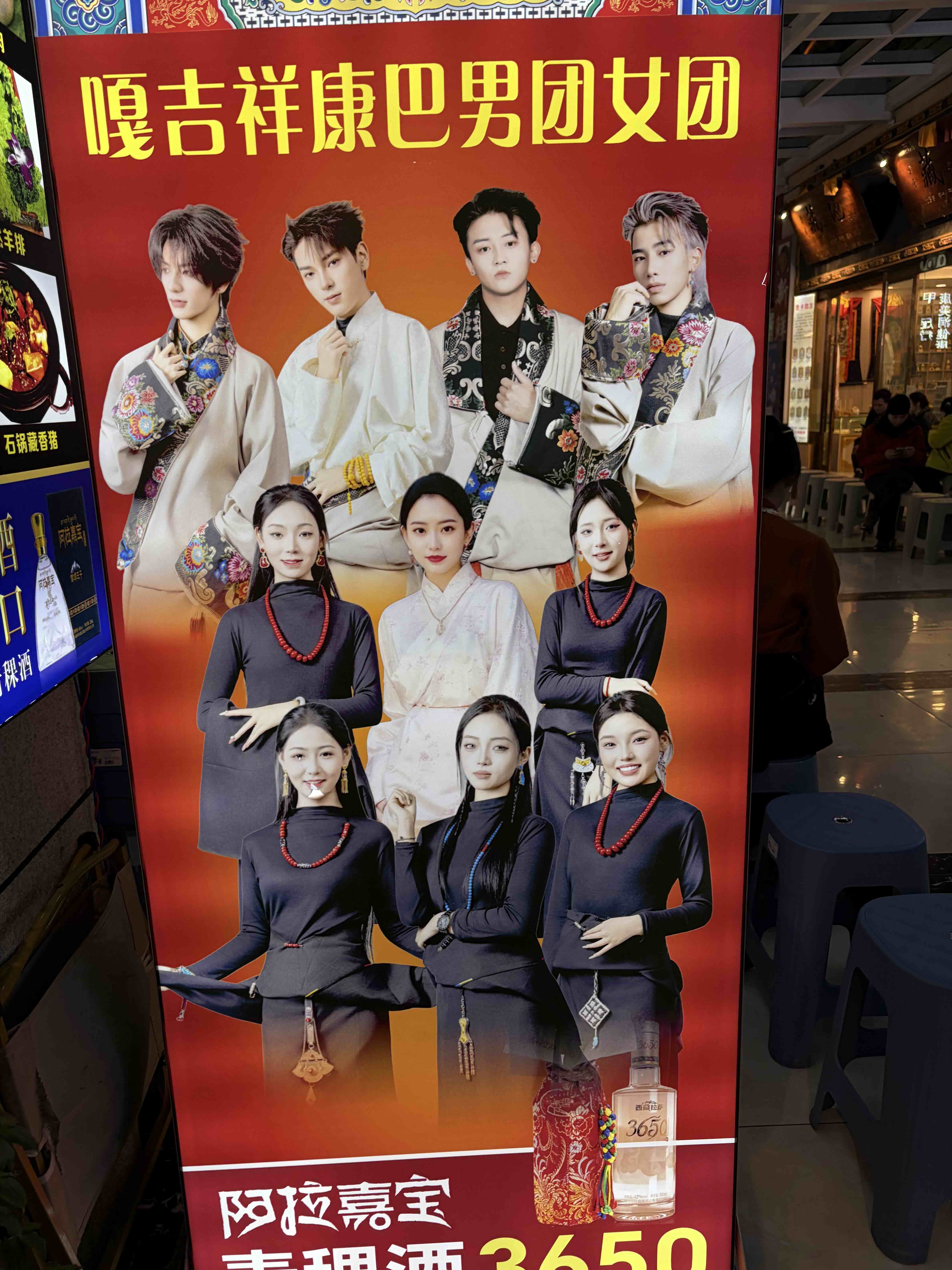
For dinner, we went to a seemingly famous local chain called “Tiancun” (田村). The funny part is that this restaurant chain has its own girl group—while we were eating, they came in and started performing for us 😂. They’re called a girl group, though their performance felt pretty half-hearted, honestly not much different from random dancing and singing on Douyin… On the other hand, the boy group at another chain next door looked way more dedicated, with a whole crowd gathered outside watching them.
Day 2: Lhasa - Drak Yerpa Monastery
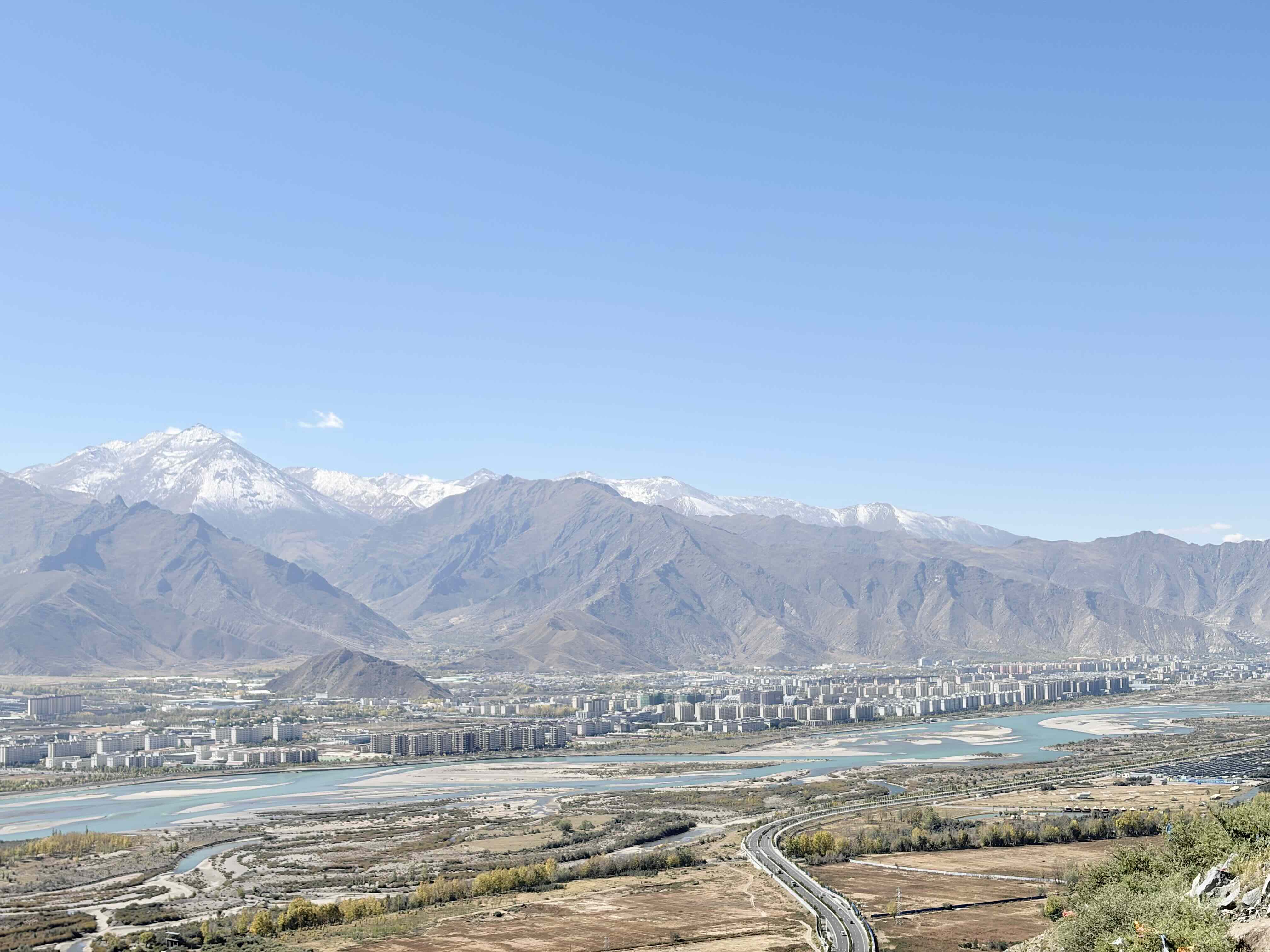
Slept in until we woke up naturally, then drove straight to Drak Yerpa Monastery, about an hour away. Along the way we passed a really pretty mountain pass—seeing so many modern buildings packed into the valley below, it was hard to believe this was the Tibetan Plateau.
We arrived at Drak Yerpa right around noon and grabbed a quick lunch at a restaurant outside the monastery gate. Funnily enough, what they call “baozi” here actually looks like dumplings to us. Then again, fair enough—both are meat wrapped in dough 😂, just round buns versus crescent-shaped dumplings.
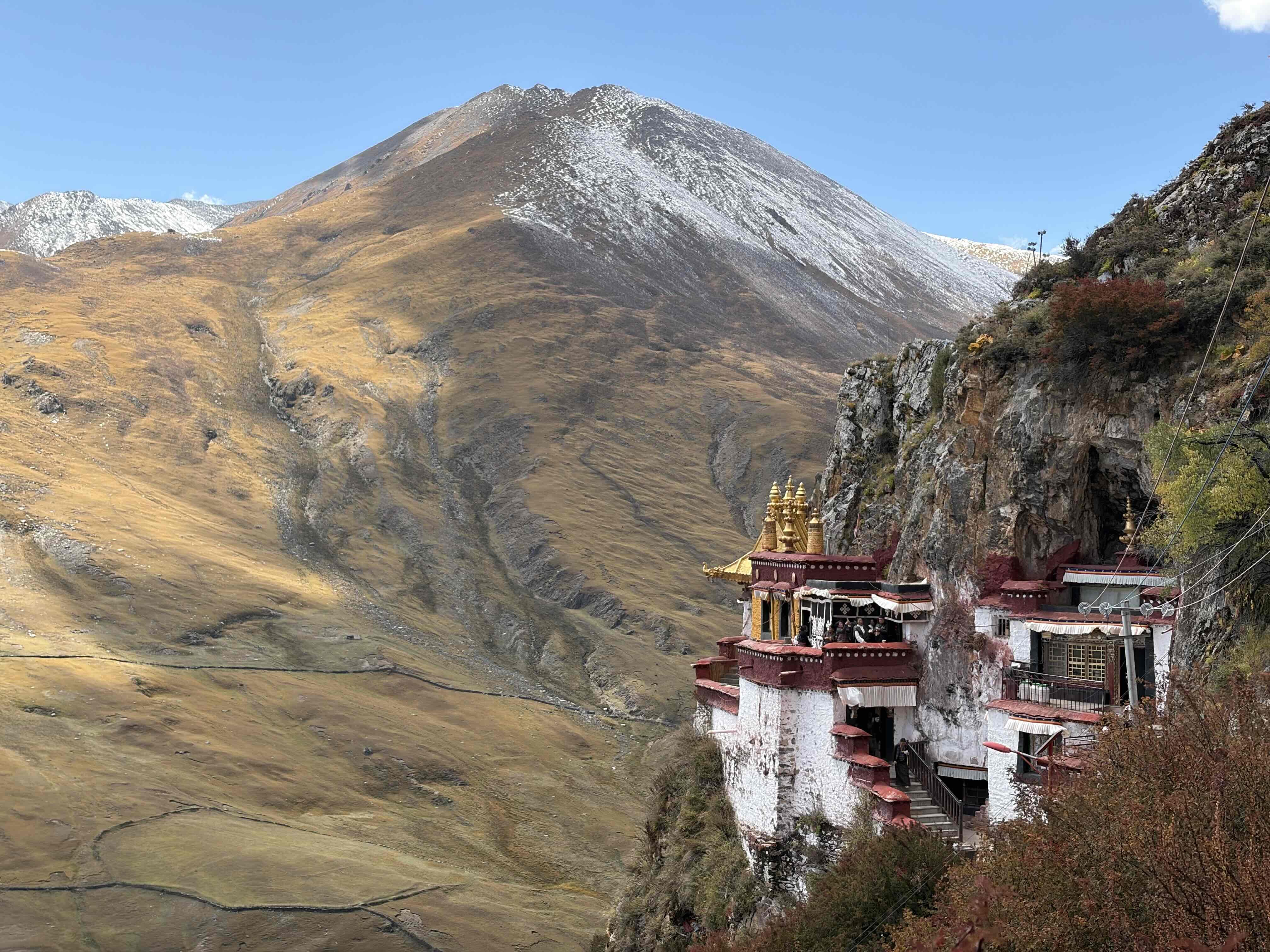
The parking lot at Drak Yerpa is already around 4,500m elevation. Luckily, I only had a slight headache and felt a bit drowsy, nothing too uncomfortable. The monastery is scattered across the mountainside and covers a huge area when viewed from below. There weren’t many tourists, but tons of locals come here to worship. Because it’s built into the mountain, the individual chapels are quite small, and combined with all the pilgrims, it gets pretty cramped everywhere… You can walk a clockwise loop around the whole complex, climbing about 200m total, which takes around 2–3 hours. Apparently there are also 108 meditation caves up around 4,900m, though unfortunately they weren’t open.
Day 3: Lhasa -> Cuoyu
Today was a big driving day—heading from Lhasa past two high-altitude lakes, Yamdrok Lake (Yanghu) and Puma Yumco, all the way to Cuoyu Village in Lhozhag County. Total distance is only 360 km, but because the roads near Cuoyu Village are badly damaged right now, the drive takes a solid 8 hours (even longer if you hit traffic).
The road to Yamdrok Lake is mostly expressway and national highway, followed by a winding mountain climb up to Gambala Pass. The pass sits at 5,000m and is home to the first viewpoint. Seriously, make sure to acclimatize properly in Lhasa before heading out—otherwise you casually hit a 5,000m pass and get knocked out immediately… Our friend said Viewpoint #1 is just okay, so we drove straight down to Viewpoint #2. High-altitude lakes really have a completely different color, and because Yamdrok has such an irregular shoreline, it’s ridiculously gorgeous.
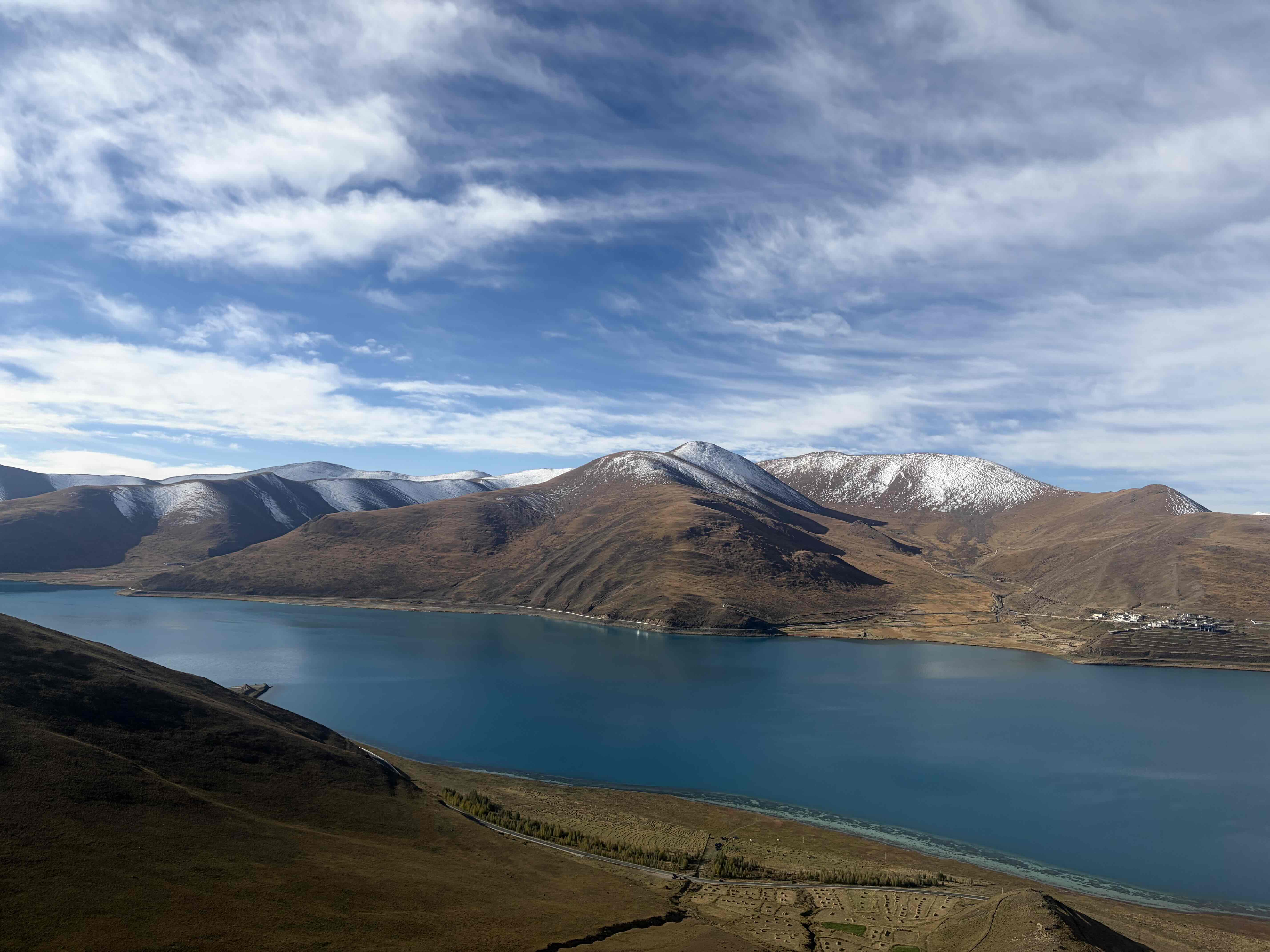
We drove along Yamdrok, stopping here and there, and eventually reached Puma Yumco. It’s supposedly the “highest freshwater lake in the world,” with the water surface sitting right at 5,000m 😂. Nothing much to say—it’s just stunning! Even better, the weather was great today, so we could see Kula Kangri straight across the lake. There are quite a few villages along the shore, and starting around here you’ll see signs at village entrances prohibiting foreigners from entering.
Past Puma Yumco, the road gets rough—lots of winding mountain switchbacks and narrow canyon roads. The canyon sections in particular looked like they constantly get hit by rockfalls and eroded by the river underneath, which felt pretty sketchy. Many stretches were under construction, very narrow, with long unpaved mountain switchbacks—definitely best to have an experienced driver take it slow.
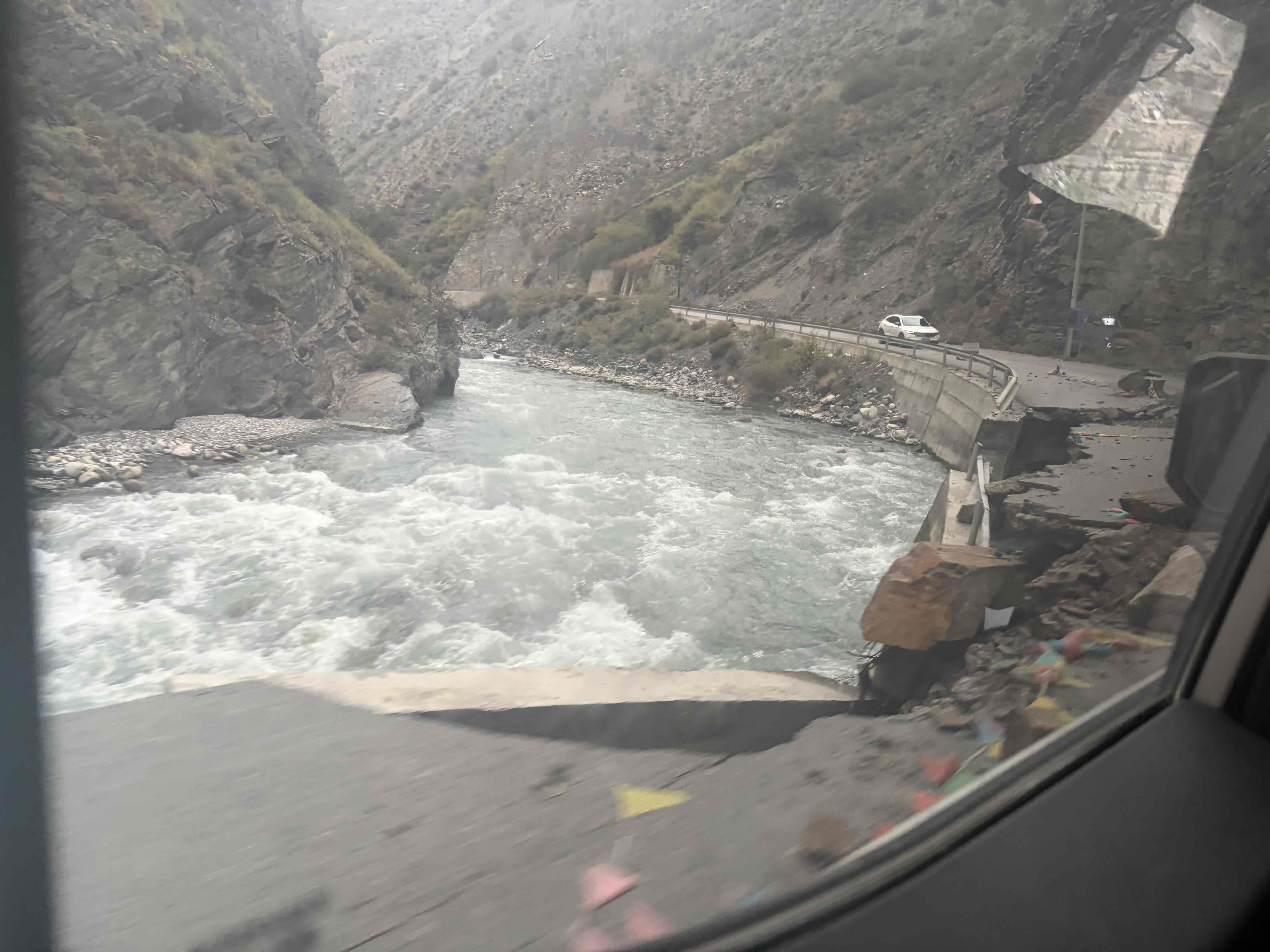
We didn’t reach Cuoyu until 6 PM. Thankfully, the newly built Cuoyu Hotel was quite nice—good dinner, good sleep, ready to hike tomorrow!
Day 4: Kula Kangri Trek
None of the Kula Kangri trekking routes are particularly hard—as long as you’ve acclimatized and don’t have altitude sickness, pretty much anyone with two legs can do them. So we didn’t overplan and just headed out with a “walk as far as we feel like” mindset. Unfortunately, the weather wasn’t great. When we drove to the Baimalin Tso parking lot around 8:30 AM, the clouds in the distance were still super thick and low. So we decided to hike Jiejiu Tso first, then circle back to Baimalin Tso later to recreate the famous Li Xian / Links Kula Kangri photo.
Hiking to Jiejiu Tso is basically a ~250m climb up to a ridge where you can see two alpine lakes and Kula Kangri in the distance. Because the slope is so gentle, it kind of feels like everywhere is a trail. We downloaded a GPX track on 2bulu, but honestly we just wandered generally toward the destination. Sadly, the weather still hadn’t cleared by the time we reached the ridge, so we snapped a few casual photos and headed back down.
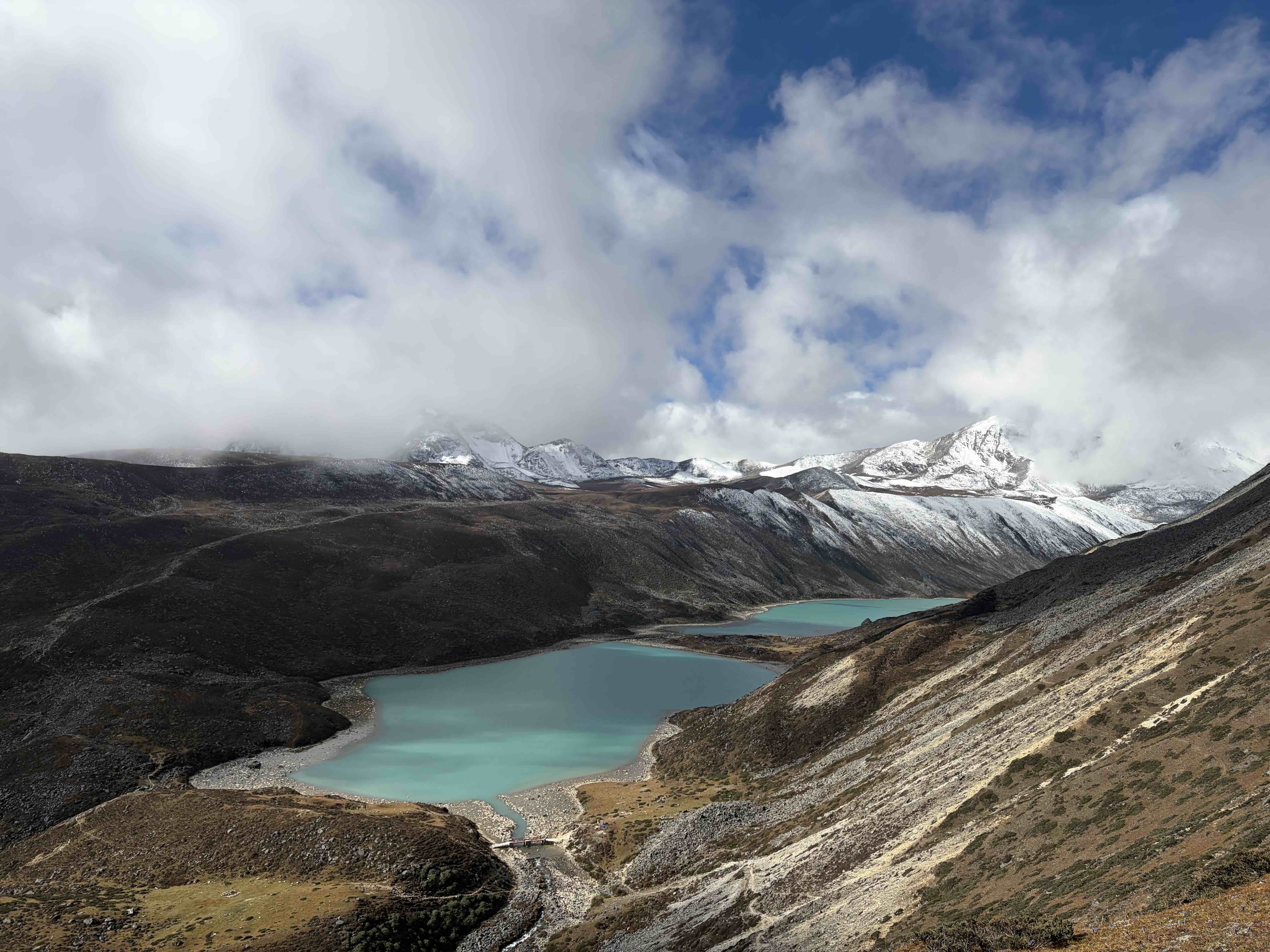
Back by Baimalin Tso, we grabbed a quick bite and started hiking counterclockwise along the lake loop. After climbing a little over 100m, you reach a viewpoint—the exact rock where Li Xian and Links took their famous shot. Most day-trippers snap their photo here and head back down. Actually, if you walk just a few hundred meters further, there’s an even better photo spot.
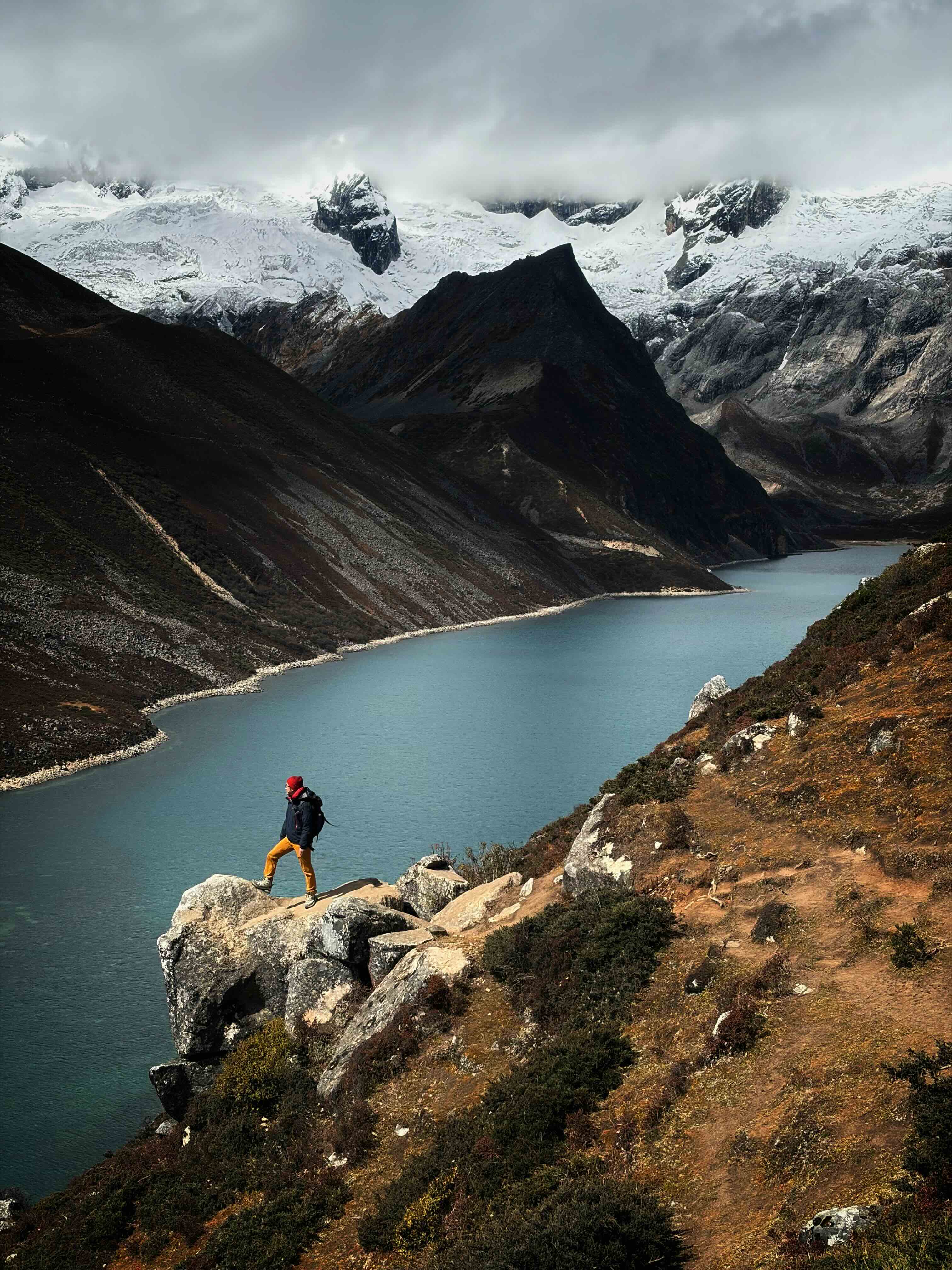
We took some photos and waited around for an hour, but the weather showed zero signs of clearing up. By then it was almost 3 PM, so we decided to call it a day and head back to the hotel.
Day 5: Cuoyu -> Kajiu Monastery -> Lhasa
Our only mission today was getting back to Lhasa before 9 PM to return the rental car, so it was a pretty relaxed day. We had breakfast and hit the road around 8 AM—expecting an 8-hour drive, plus a ~30-minute detour to visit Kajiu Monastery near Lakang Town. Lakang Town sits basically right on the China–Bhutan border. Bhutan doesn’t have diplomatic relations with China, so there’s no land border crossing at the moment, though looking at the map, there really is a road heading south from Lakang straight toward Bhutan.
Kajiu Monastery turned out to be the hidden gem of the whole trip. I’d never heard of it before, but once we got there, it was so worth visiting. Driving up the winding mountain road from Lakang (3,100m) to Kajiu Monastery (nearly 4,000m), you immediately see what an incredible location it has. The peak it sits on isn’t the tallest around, so it’s surrounded on all sides by snow-capped mountains—from the switchbacks, you can see towering snowy peaks rising right behind the monastery, absolutely breathtaking. Sadly, the best angle to photograph the monastery with the snow mountains behind it was right on the winding road, so I didn’t manage to get a shot.
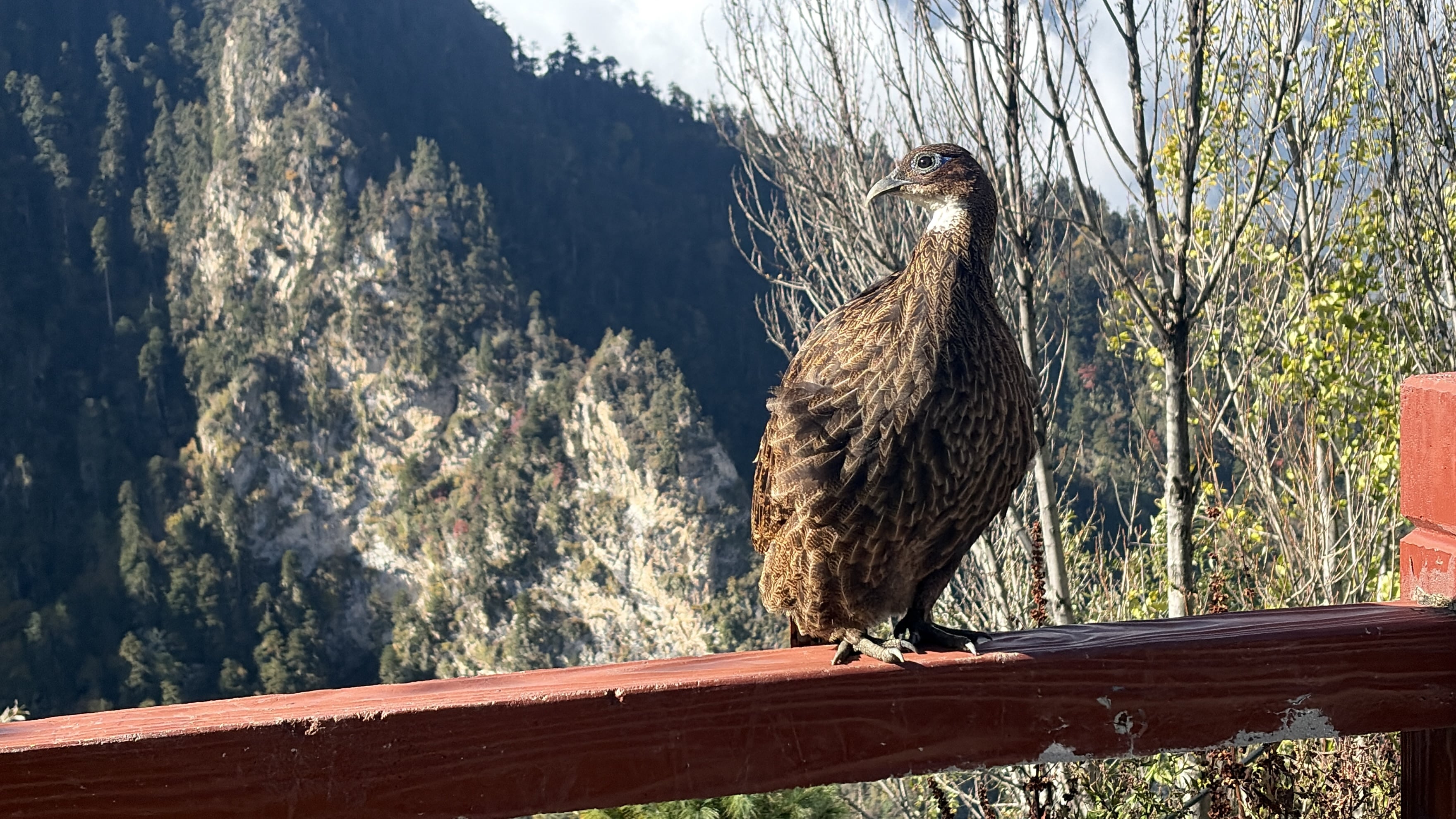
Kajiu Monastery isn’t huge, though it has restaurants, hotels, and everything you’d need. There’s a kora (circumambulation) trail that takes about 20 minutes to walk and is totally worth doing. Along the trail there’s a grassy lawn where the monks apparently put out food every morning and evening, so wildlife shows up on schedule. The most famous visitor is Nepal’s national bird, the Himalayan monal. The males have insanely vibrant, iridescent plumage—when I got there, one was casually strolling around, and my only regret is not catching it in flight. There were a few females nearby too, though their colors are much more plain by comparison.
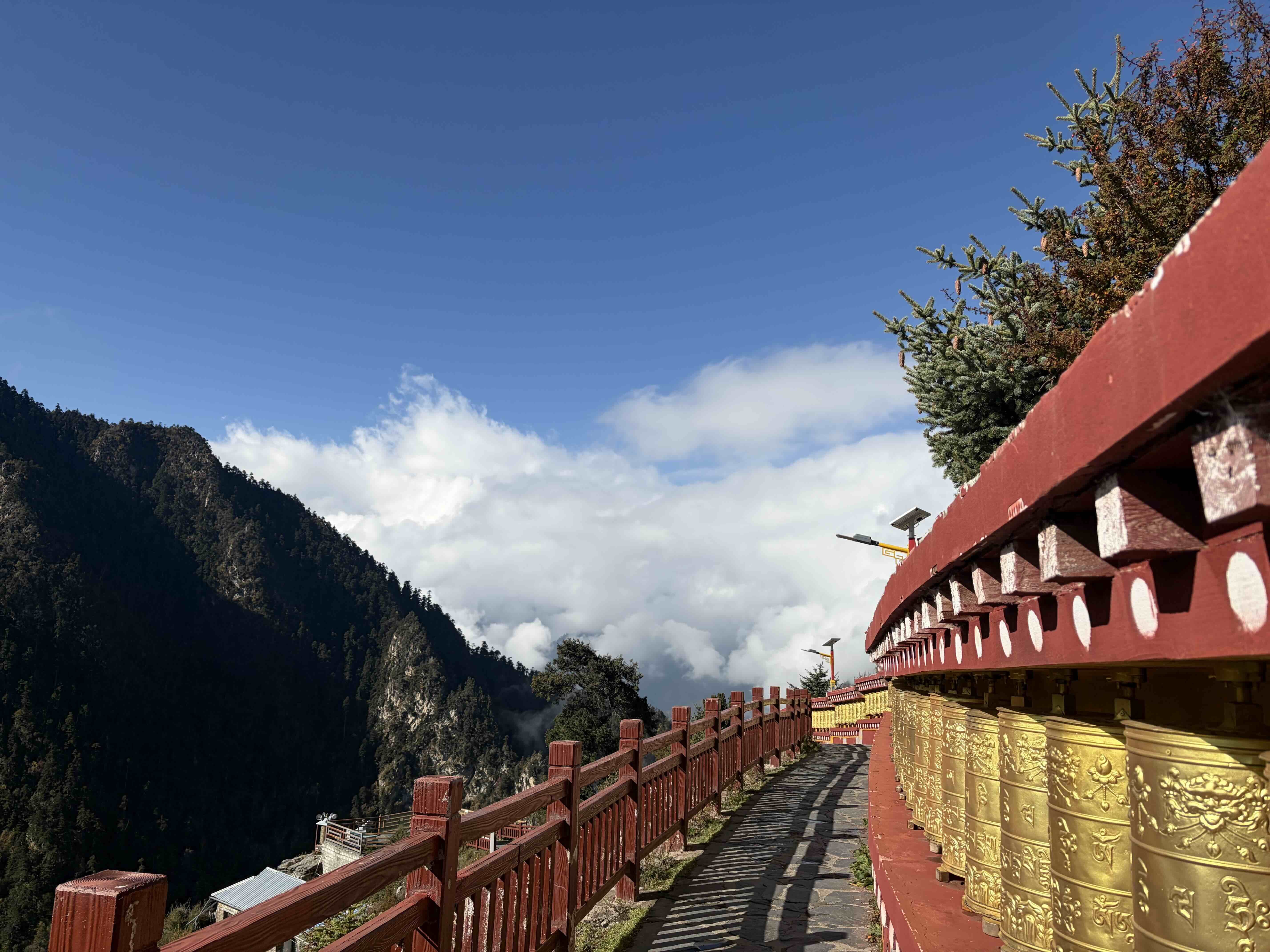
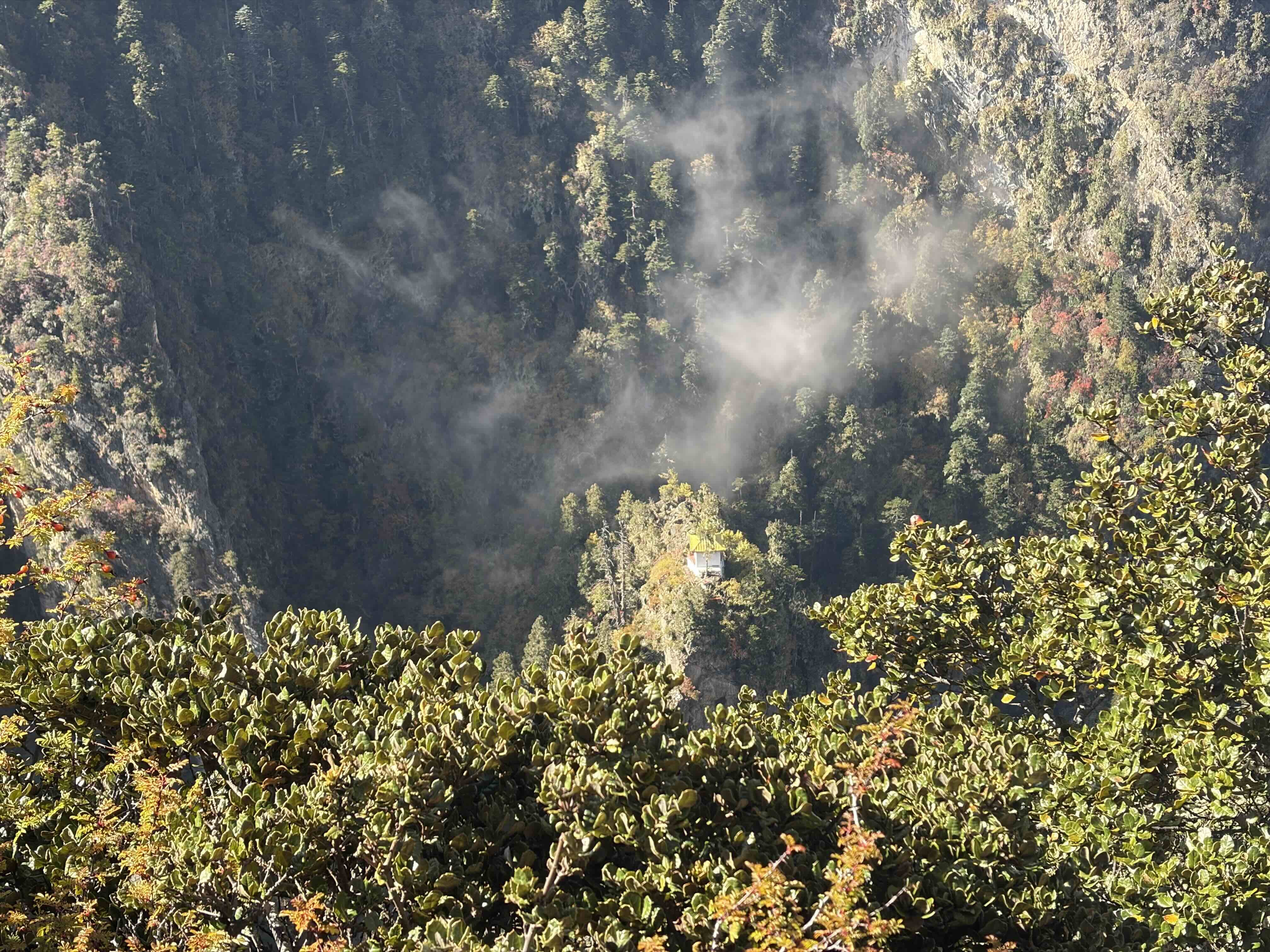
Next to the lawn there’s a glass viewing platform—stepping out and looking down really drives home just how sheer the cliffs are here. Even wilder, looking down the steep mountainside, you can spot a few buildings perched precariously along the cliffs. Hard to imagine who actually climbs down there—terrifying.
There’s a side trail off the kora path for circumambulating the mountain, and it’s ridiculously steep—I only took a few steps before my fear of heights kicked in… Right next to it is another trail going straight down to Lakang Town, also absurdly steep. Feels like it’d be a fun hike to try if you ever had the time.
Day 6: Lhasa - Jokhang Temple
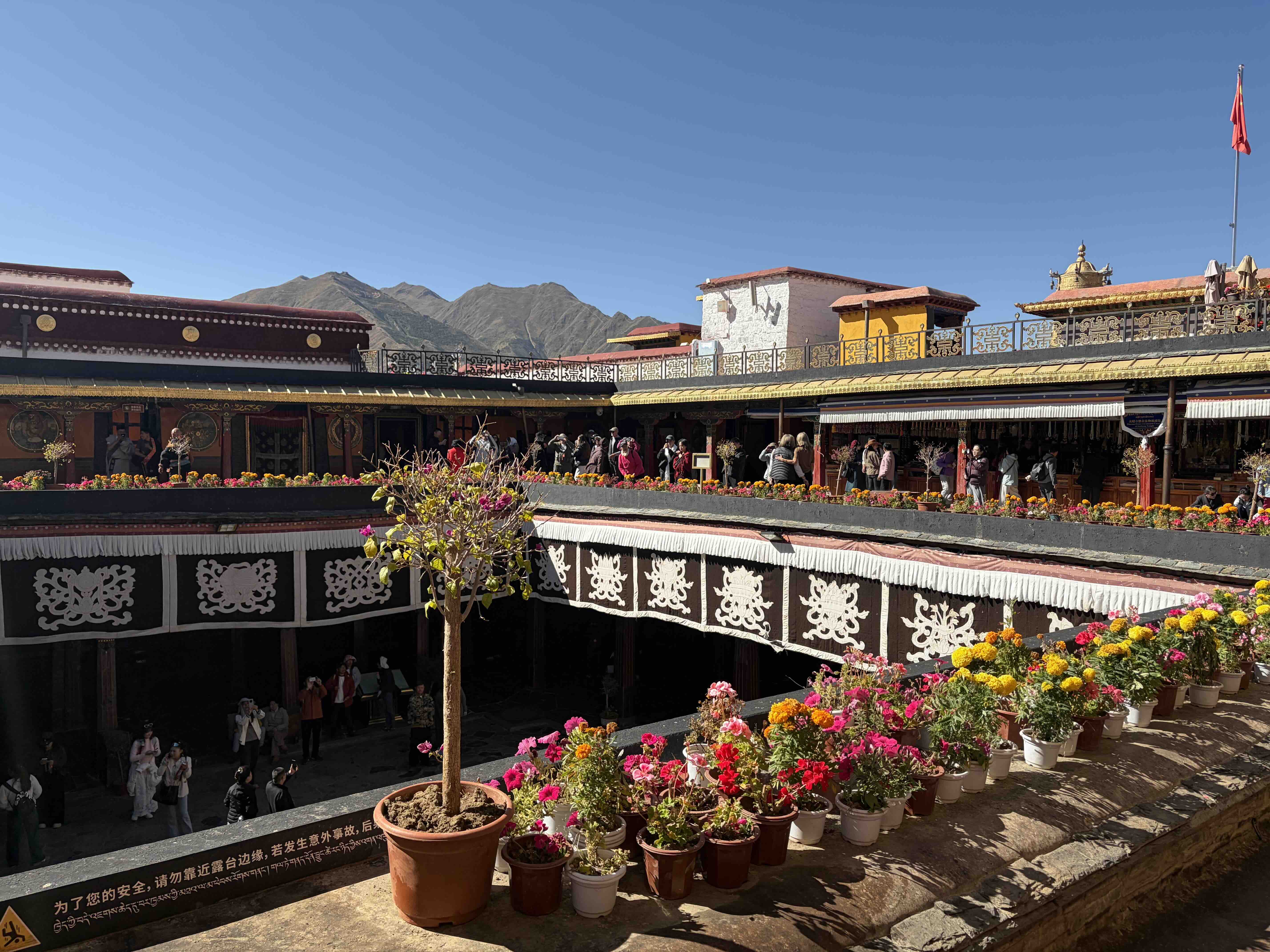
A pretty uneventful day. Visited Jokhang Temple in the morning, then went back to Ningdu Café for lunch and chilled for a bit before flying back to Chengdu.
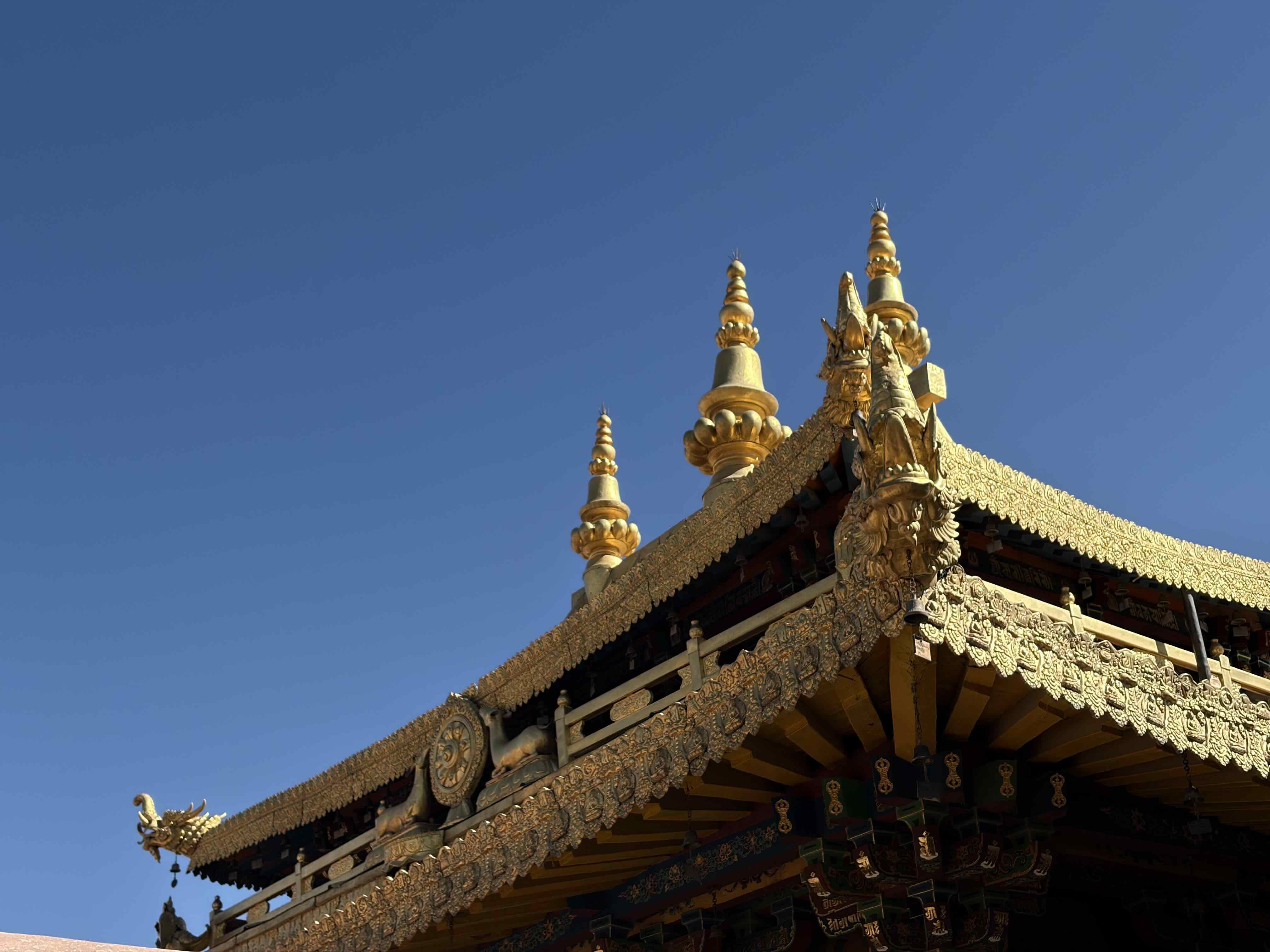
I also visited Jokhang Temple back in 2007, and the one thing I remember that’s still exactly the same is the huge number of devout pilgrims prostrating outside the entrance. Most bring a mat and repeatedly go from standing straight up to lying flat on the ground. Seeing so many people in the square praying with such genuine devotion, you really do feel the power of faith. Inside Jokhang Temple it was packed—being an enclosed space filled with tons of butter lamps and crowds of people, I started feeling super oxygen-deprived after just a short while. No exaggeration, that half hour inside Jokhang Temple was the most breathless I felt during my entire trip to Tibet 😂.
Random Thoughts
- Lhasa—or really Tibet as a whole—feels way too modernized. On one hand it’s this deeply religious place, and on the other it’s so modern; the contrast feels a little weird.
- Lhasa is roughly split into the Old Town and the New Town. The Old Town is on the north bank of the river around the Potala Palace, mostly lower buildings (though still renovated). The New Town on the south bank is straight-up typical Chinese third-tier city apartment blocks.
- There are propaganda banners and slogans everywhere in Tibet.
- Super dry, and the sun is brutally strong.
- Way fewer flies than when I came 20 years ago—probably because the environment and sanitation have improved.
- It’s no exaggeration to joke that Chengdu is the capital of “Xin-Xi-Lan” (a pun on New Zealand / Xinjiang + Xizang/Tibet + Lanzhou)—Tibet is heavily influenced by Sichuan culture. There were already tons of Sichuan restaurants 20 years ago, and now it’s even crazier. Even in tiny middle-of-nowhere towns along the way, you’ll almost always find a Sichuan restaurant run by folks from Sichuan.
- Local pilgrims are incredibly devout. They carry bowls of yak butter to top up the butter lamps along the way, and sometimes smear butter onto the walls by hand. Many walls—especially in cave-carved temples—are polished completely shiny from this.
- Lhozhag County is right on the border, so remember to get a border permit before you go.
- My friend said the Himalayan monals at Kajiu Monastery fly over from Bhutan every day—no idea if that’s actually true.
- Drivers in Tibet (at least in Lhasa) are surprisingly law-abiding—yielding to pedestrians, using turn signals when changing lanes. Though supposedly it’s because there are cameras everywhere.
- Prices in Tibet are actually pretty high, probably because transporting goods up onto the plateau is tough? Food and hotels cost about the same as in Chengdu, and for the same price the food quality can even be a bit worse than in Chengdu.